
Last updated November 15, 2026
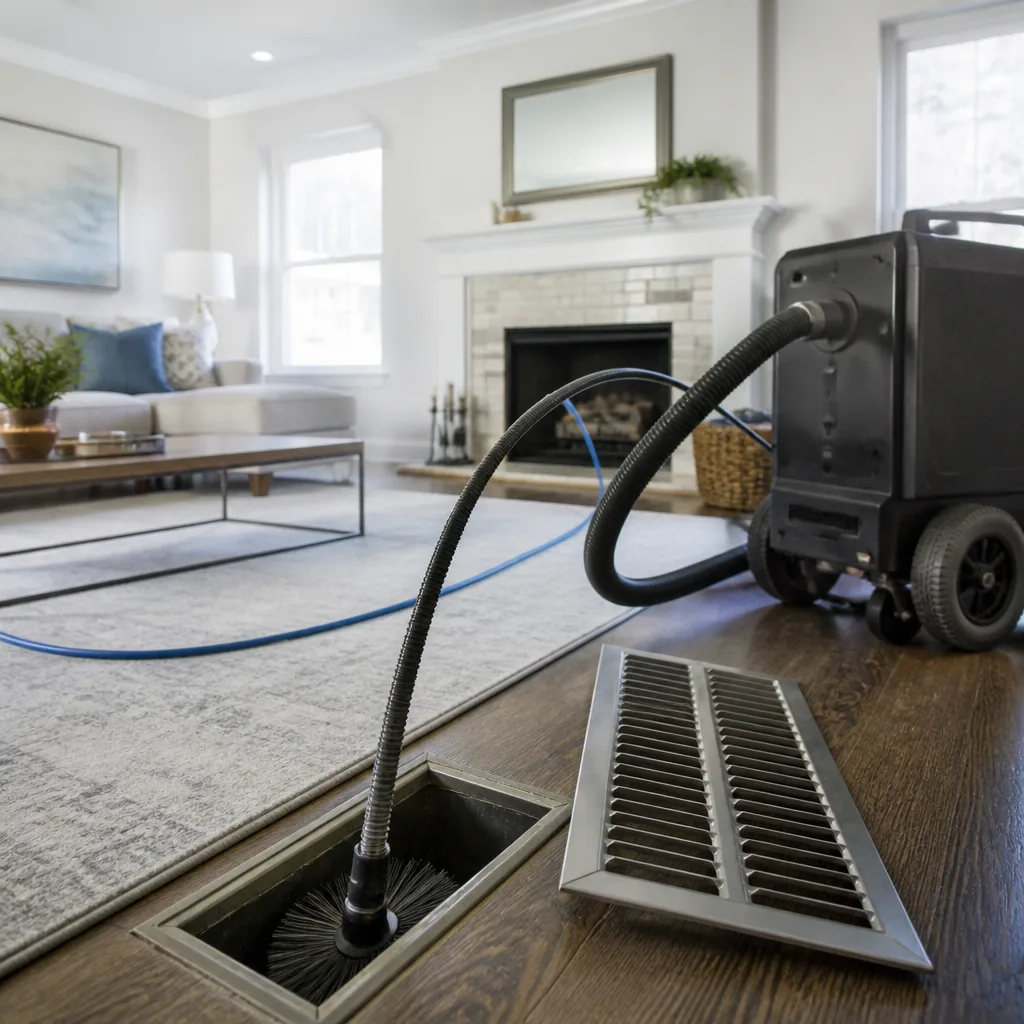 Whole-home duct cleaning
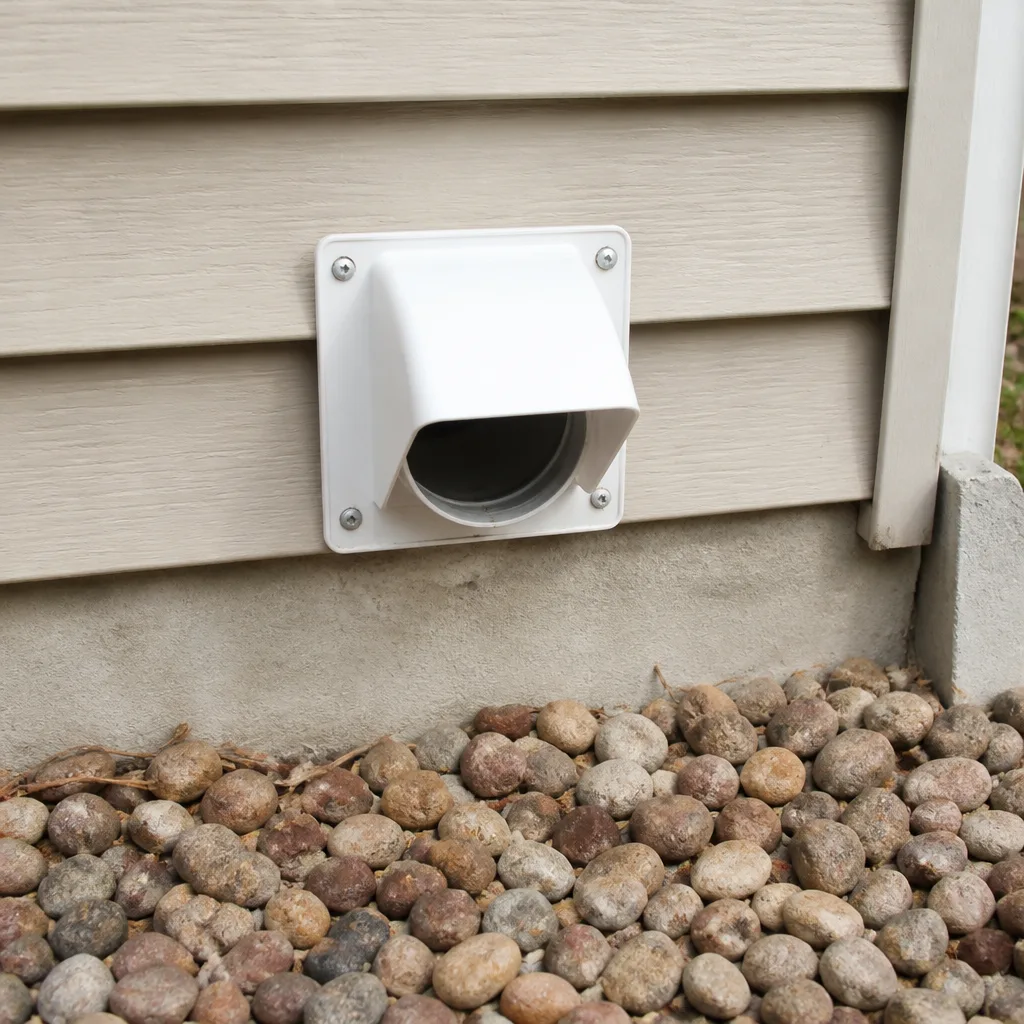 Dryer vent cleaning
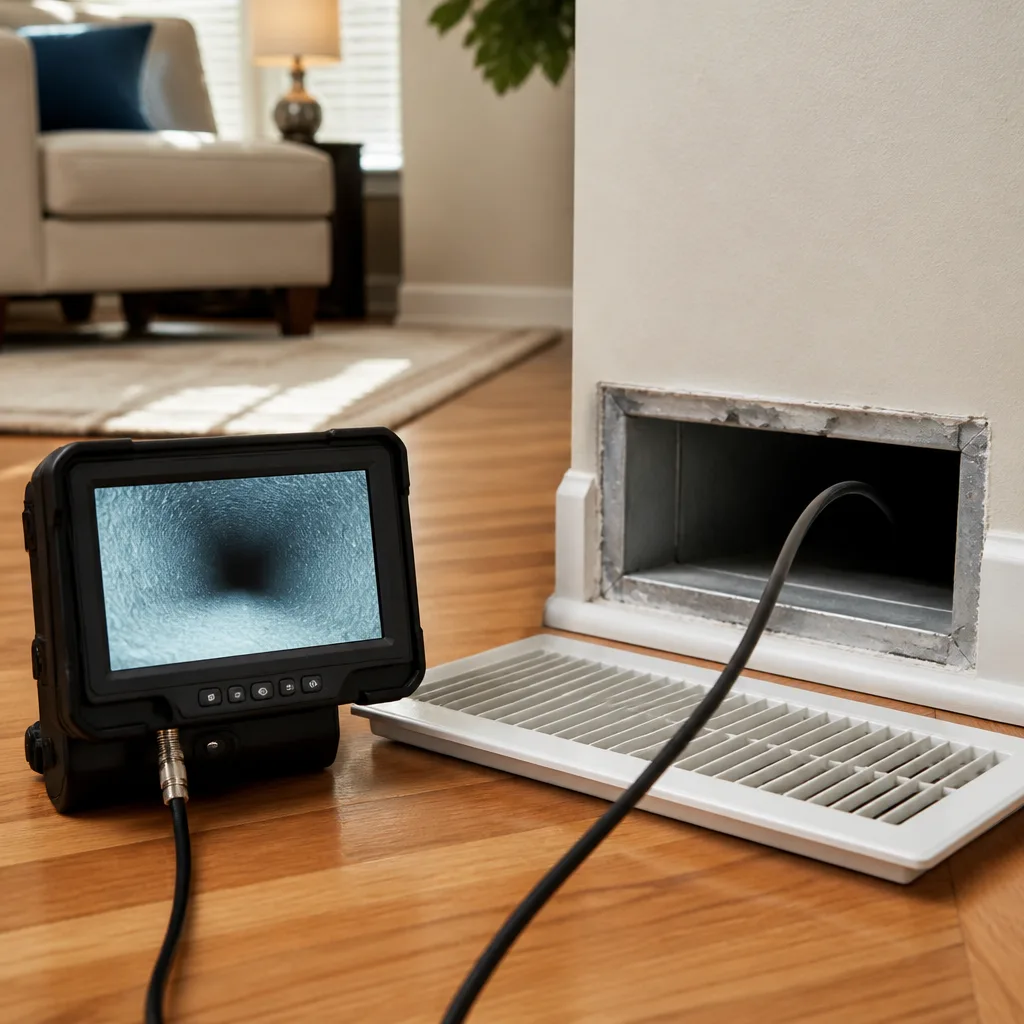 Camera inspection
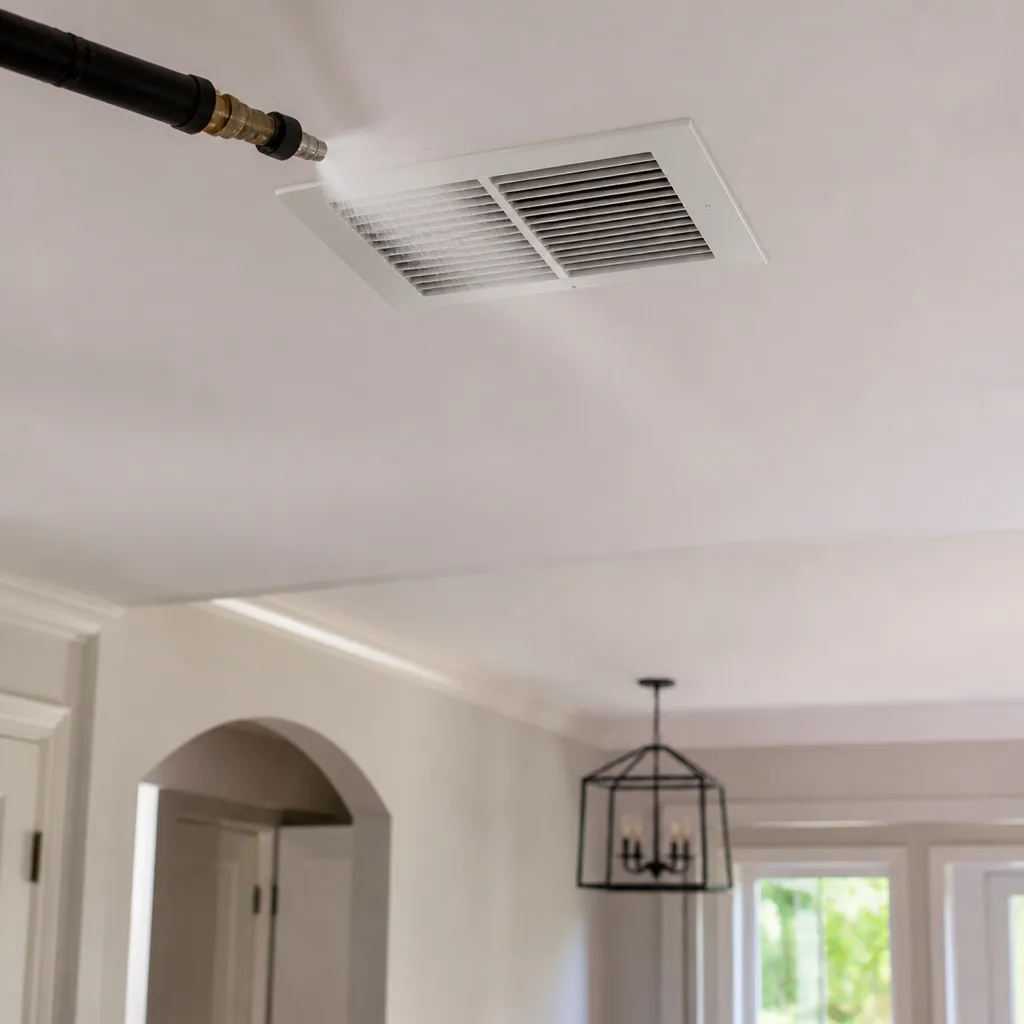 Sanitizing & deodorizing
Whole-system duct and dryer vent check with before-and-after photos - you see exactly what came out of your vents
That "$99 whole-house special" is a bait ad - the real number appears once they are in your hallway, or the "clean" is a shop-vac at the register. We photograph the inside of your ducts before and after instead.
Air Duct Cleaning Emergency Preparedness Guide for Spring Hill Homes
Most Spring Hill homeowners have a hurricane plan that covers water, batteries, and the generator. Almost nobody has a plan for the duct system. That’s the gap this guide fills. After Hurricane Idalia’s near-miss of Hernando County in 2023, homes that sat through extended power outages began reporting HVAC-related mold problems within 72 hours of restarting their systems. The storm didn’t cause those problems. The stagnant, humid ductwork did, and it happened while families were still cleaning up the yard. Here’s what to do before, during, and after an outage so your ducts don’t become the second emergency.
Quick Answer
Preparing your duct system for a storm or outage means sealing registers and running a dehumidifier before the HVAC goes down, inspecting the air handler, coil, and drain pan before you restart it, and watching for moisture, compressed insulation, or odor inside the ducts before the system circulates anything. If water got in, professional air duct cleaning should happen before the system runs again, not after you notice a smell.
Styles & brands we work with
- Whole-home duct cleaning
- Dryer vent cleaning
- Camera inspection
- Sanitizing & deodorizing
Table of Contents
- Pre-Storm Preparation: What to Do Before the Power Goes Out
- Post-Storm System Restart: The Step-by-Step Protocol
- How to Spot Water Infiltration in Your Ductwork
- The Mold Timeline in Humid Ductwork
- Insurance Claims vs. Out-of-Pocket Maintenance
- What Documentation You Need
- When Post-Storm Duct Cleaning Is Necessary
- Common Mistakes to Avoid
Pre-Storm Preparation: What to Do Before the Power Goes Out
Pre-storm duct preparation is about controlling humidity while the system is down, not about protecting the ducts from wind. In Spring Hill, the bigger threat during an outage is the warm, humid air that settles into ductwork in an unairconditioned house. Sealing registers and running a dehumidifier before the HVAC goes offline reduces the moisture load the system will restart into.
Here’s what a solid pre-storm checklist looks like:
- Close and seal every supply register. Use the dampers if your system has them. If it doesn’t, tape heavy plastic over each register with painter’s tape. This keeps humid outdoor air from drifting through the duct run while the blower is off.
- Set portable or whole-house dehumidifiers before the storm. If you own a whole-house unit, run it until the power fails. If you use portables, place them in the rooms served by the longest duct runs, usually the far bedrooms.
- Photograph the air handler, coil, and drain pan. A dated photo set before the storm gives you a baseline for insurance later. It also tells a technician what “normal” looked like before anything got wet.
- Clear the condensate drain line. A clogged drain line turns into a pan overflow the moment the system restarts, and that water ends up in ductwork insulation.
- Note any duct runs that pass through the attic or garage. These runs see the most extreme heat and humidity during an outage and are the first place to check afterward. In Spring Hill, that’s most of them.
None of this is glamorous. All of it reduces the chance that you’re calling for emergency duct work two days after the storm passes.
Post-Storm System Restart: The Step-by-Step Protocol
Don’t flip the thermostat the moment the power comes back. A system that sat through an outage in a humid Spring Hill house needs a short inspection first. Restarting a wet or debris-filled system spreads whatever is inside it through every room in the house.
Here’s the protocol we recommend to every Spring Hill homeowner after an extended outage:
- Turn off the breaker to the air handler. Work on the system dead, not live.
- Open the air handler cabinet and look for standing water. Check the bottom of the cabinet, the insulated interior walls, and the drain pan. Any water means stop and call a professional before restarting.
- Inspect the evaporator coil. Look for visible moisture, algae growth, or debris collected on the fins. A wet coil will grow mold quickly in warm air.
- Do a smell test on the supply registers. Musty or earthy odors mean moisture is present somewhere in the run. That’s a duct-cleaning issue, not a filter issue.
- Check the duct insulation on runs in the attic or garage. Compressed, damp, or peeling interior insulation is a sign that water found its way in. That run needs to be cleaned and possibly repaired.
- Change the air filter. After any outage, the filter has been pulled through with dust and debris the system wouldn’t normally move. Don’t restart the system on the old filter.
- Restart and monitor for 24 hours. Watch for water at the drain pan, condensation on the cabinet, and any new odor.
The reason we lead with the breaker and the water check: the first 24 hours after restart determine whether you’re looking at a routine cleaning or a contamination-level job.
How to Spot Water Infiltration in Your Ductwork
Water in ductwork doesn’t usually announce itself. There’s no puddle on the floor in most cases. The signs are subtle: a slight musty odor when the system kicks on, a register that feels cooler and damper than its neighbors, or insulation that looks a little flatter than it should. In Spring Hill’s humidity, those small signs tend to accelerate.
Watch for these indicators before you run the system again:
- Visible moisture on the interior of a register boot, on the supply duct near the air handler, or inside the plenum.
- Insulation compression on attic or garage duct runs. Wet fiberglass insulation mats down and loses its loft, which is a clear sign water has been through it.
- Musty, earthy, or “dirty sock” odor at any supply register. If it’s only at one register, the problem is in that run. If it’s everywhere, the air handler or main trunk is suspect.
- Visible mold or dark staining on the flex duct exterior or at the connection points.
- Condensation on duct surfaces after a system restart in a house that hasn’t fully dried out.
- Decline in airflow at registers that were fine before the storm, suggesting collapsed or wet insulation inside the duct.
If you see one or two of these, a professional inspection is worth the call. If you see three or more, don’t run the system until a technician looks at it. The cost of an inspection is far less than the cost of having a professional duct cleaning service deal with mold that spread through the whole system.
The Mold Timeline in Humid Ductwork
This is the part most emergency guides miss. Mold doesn’t wait for you to notice a smell. In warm, moist, dark ductwork, mold spores that were already present in the system can colonize surfaces within 24 to 72 hours of an outage. By the time an odor is obvious, the growth is already established.
Here’s how the timeline typically plays out after an extended power loss in Spring Hill:
- Hour 0 to 12: The HVAC is off. Humidity inside the ductwork climbs toward the ambient humidity of the house, which in a closed Spring Hill home in summer can be high. Condensation begins on cool surfaces like the coil and metal plenum.
- Hour 12 to 24: Spores already in the ducts, on the coil, and in the drain pan find the moisture they need. Growth begins. There’s no visible sign and no smell yet.
- Hour 24 to 72: Colonization progresses. The first odors start to appear at supply registers. Insulation in the ducts can begin to absorb moisture and stay damp.
- Day 3 to Day 7: Visible growth on the coil, drain pan, or duct liner. Odor is obvious. Distributing air through the system at this point pushes spores into every room.
- Day 7 onward: Contamination-level situation. Routine cleaning won’t be enough; the job requires HEPA-level extraction equipment and full containment.
That’s why “waiting to see if it smells” is the wrong strategy. By the time the smell arrives, the window for a simple cleaning has already closed. If your home in Spring Hill sat through a multi-day outage, schedule an inspection as soon as you can, even if everything seems fine.
Insurance Claims vs. Out-of-Pocket Maintenance
Whether post-storm duct cleaning is covered by insurance depends on what caused the problem, not on the cleaning itself. If a storm event directly introduced water into the ductwork, roof, or HVAC cabinet, that’s typically a covered peril. If the problem is condensation or humidity growth that happened simply because the power was out, insurers usually treat it as maintenance. The distinction matters, and it’s worth understanding before you call your adjuster.
Usually covered by insurance
- Water intrusion from roof or window damage that reached the air handler, ductwork, or attic runs.
- Flooding that reached the HVAC equipment or interior duct runs.
- Wind-driven rain that got into the system through damaged exterior components.
Usually not covered
- Mold growth from humidity during an outage, without a direct water intrusion event.
- Routine dust accumulation accelerated by a storm.
- Insulation degradation from heat and time.
If your claim involves water intrusion, document everything before you clean anything. Photograph, save receipts, keep the failed filter, and get a written scope of work from the duct cleaning company before the job starts. Adjusters move faster when the documentation is complete.
What Documentation You Need
Documentation is the difference between a claim that gets approved and one that gets denied. For post-storm duct work in Spring Hill, you want a file that stands on its own. Here’s the list we recommend:
- Dated photos before restart. Air handler, coil, drain pan, and every register you’re concerned about.
- Photos of any visible water intrusion. Roof, ceiling, window, or attic, wherever the water entered.
- A written scope of work from the duct cleaning company. Method, equipment, and areas treated.
- Before-and-after photos of your own ducts. A professional provider should supply these as part of the job, not on request.
- Invoices for any mitigation you paid for out of pocket (dehumidifier rental, temporary repairs).
- Correspondence with your insurer, including dates and adjuster names.
If you’re working with a public adjuster or contractor, make sure the duct cleaning scope is separate from the general construction scope. Cleaning ductwork after a construction or storm event is a specific job, and it needs its own line item.
When Post-Storm Duct Cleaning Is Necessary
Not every storm calls for a cleaning. A power flicker and a little rain doesn’t require it. Prolonged outages in humid weather, water intrusion, or visible contamination do. Here’s how we think about the threshold in Spring Hill.
- Clean: A multi-day outage in warm weather, even without visible water. The humidity load alone justifies an inspection and, in most cases, a cleaning.
- Clean: Any visible water in the air handler, duct insulation, or plenum.
- Clean: Any musty or earthy odor at supply registers that wasn’t there before the storm.
- Clean: Visible mold growth on the coil, drain pan, or duct surfaces.
- Clean: Post-construction debris introduced during storm repair work (drywall dust, insulation scraps, sawdust).
- Skip the cleaning, inspect only: Short outage, no water intrusion, no odor, system returns to normal operation.
When a cleaning is warranted, the method matters. Consumer-grade shop vacuums and one-wand blowouts don’t remove lodged debris or surface growth from duct walls. A proper job uses rotary brush agitation to lift material off the duct wall and HEPA-rated extraction to capture it. That’s the combination we run: Duct Cleaning Spring Hill deploys Rotobrush rotary brushes with Nikro HEPA extraction, and for jobs that involve allergens, mold spores, or post-construction debris, Abatement Technologies equipment for negative-air-pressure containment.
It’s also worth calling dryer vent cleaning onto the schedule if your dryer vent terminates outside a wall that was subjected to storm damage, or if the vent line itself passes through an area that got wet. Lint becomes much more of a fire concern when the vent is compressed or partially blocked by debris.
Common Mistakes to Avoid
- Restarting the system without inspecting the air handler. Flipping the thermostat after an outage is the single most common mistake we see in Spring Hill, and it’s the one that turns a routine cleaning into a contamination-level job.
- Running the system to “dry it out.” The system doesn’t dry wet ductwork, it spreads the moisture and any spores through every room. Let the ducts dry with the system off and the house ventilated before restarting.
- Cleaning with a shop vacuum or a single-wand blower. Consumer equipment doesn’t capture what it loosens. It just redistributes it into the room, the ducts, and your lungs.
- Waiting for a smell before acting. Odor shows up after mold has already colonized. By then, the job requires more equipment and more time.
- Skipping the filter change after the outage. A filter that absorbed a multi-day humidity load is no longer doing its job.
- Assuming the duct cleaning is covered by insurance without checking. Call the insurer before work begins. If the claim is legitimate, documentation supports it. If it isn’t, at least you know.
- Trusting a “before-and-after” that shows someone else’s ducts. Every professional provider should show you photos of your own system, not stock imagery. Ask up front.
See the difference
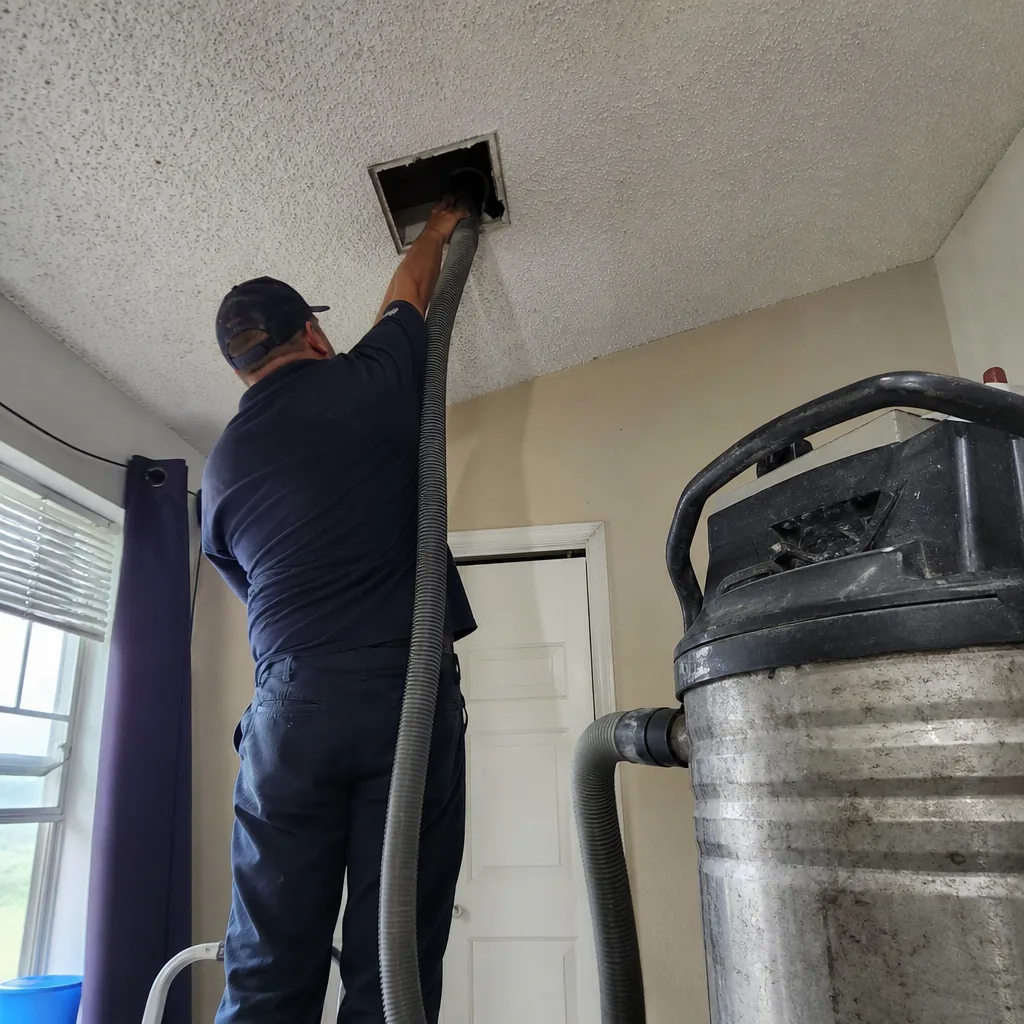 Before
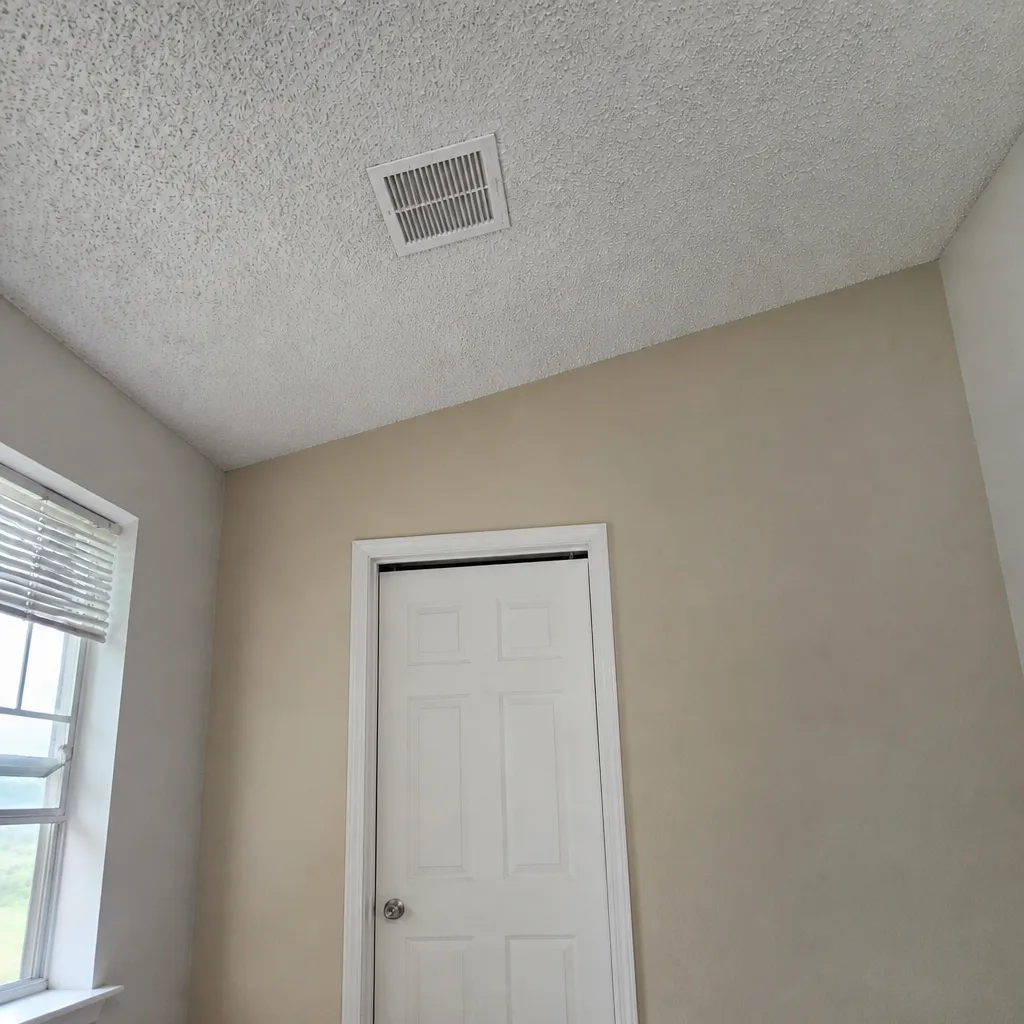 After
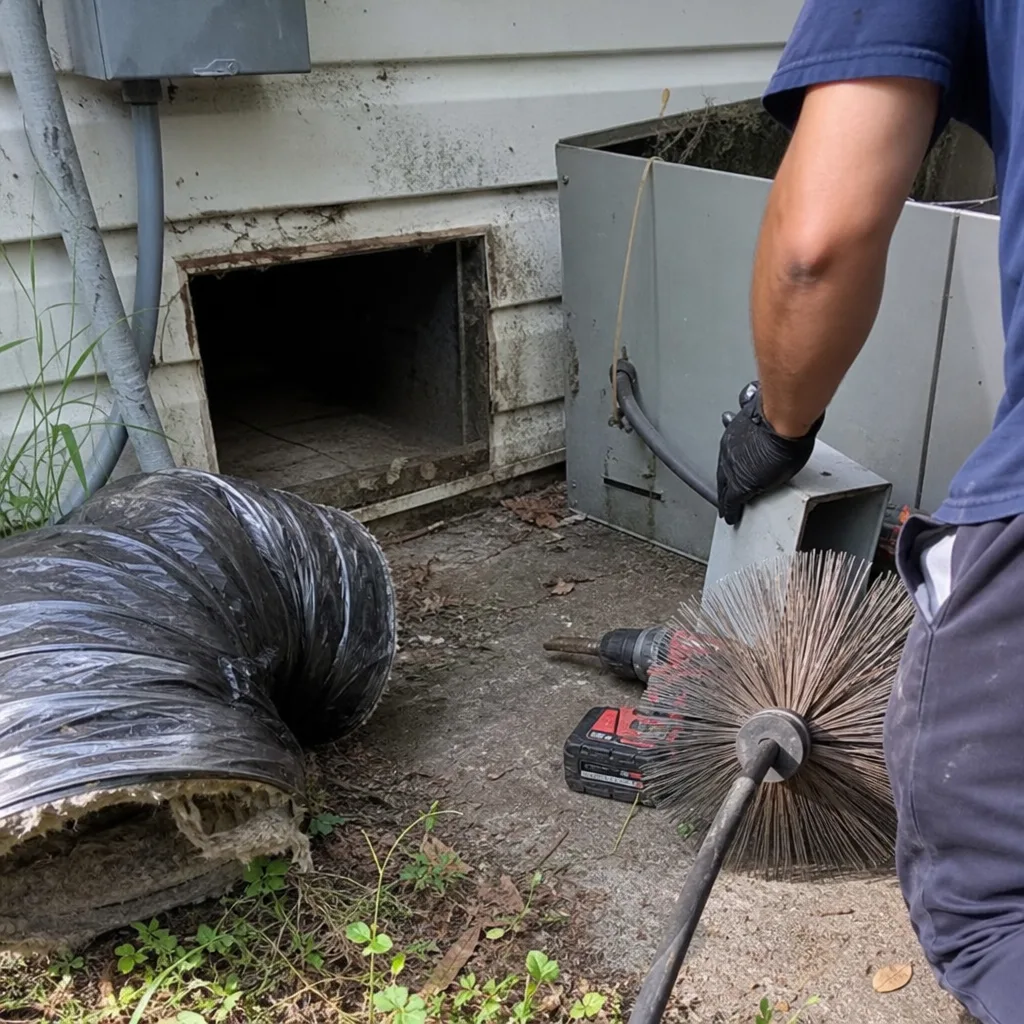 Before
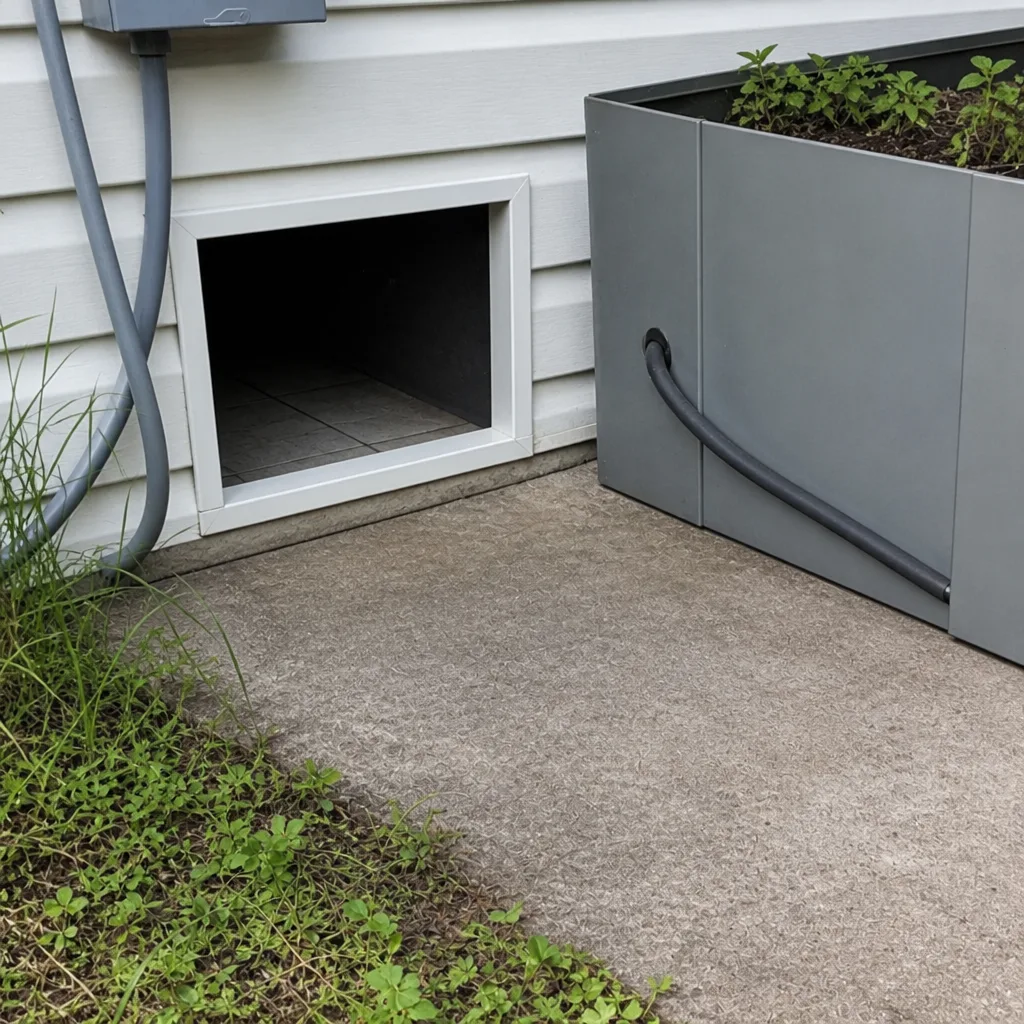 After
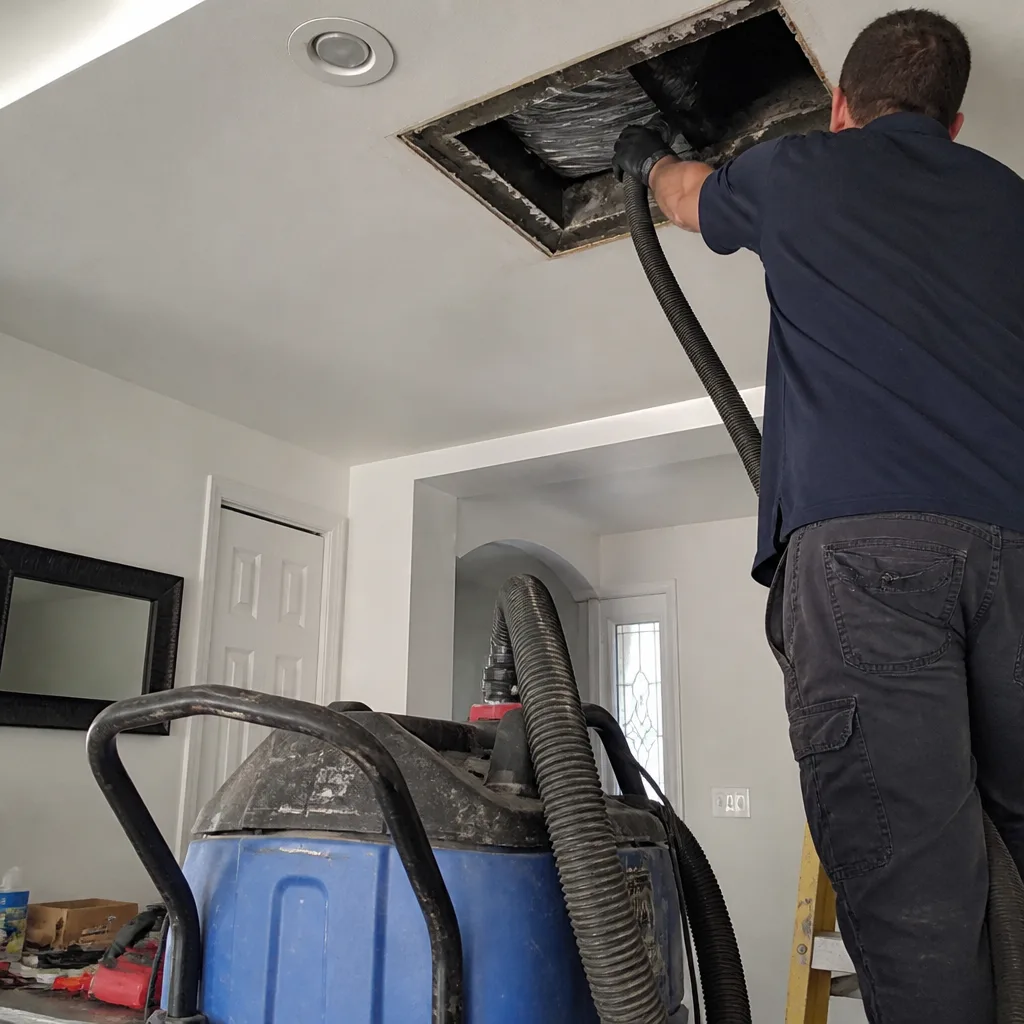 Before
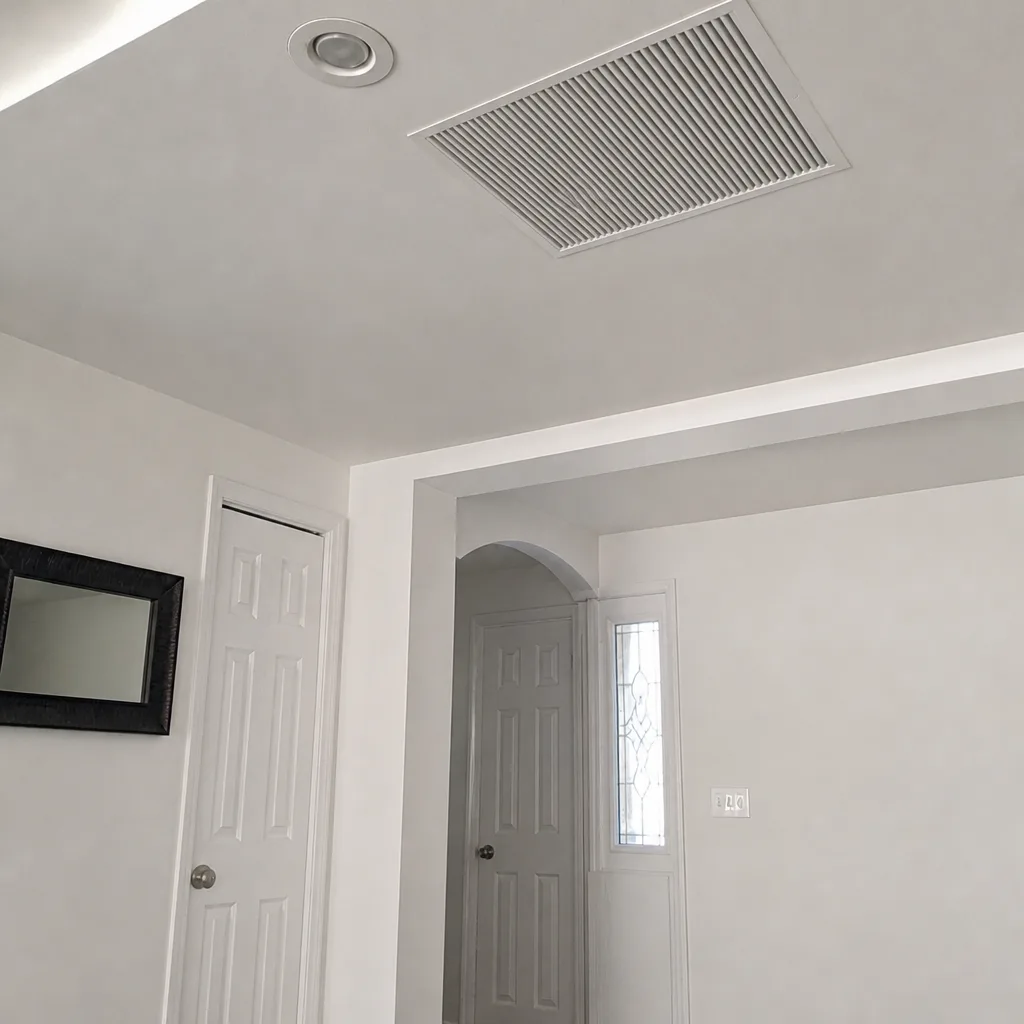 After
When to Call a Professional
Call a professional after any of the following: a multi-day outage during warm weather, visible water in the air handler or ductwork, any musty or earthy odor at supply registers, visible mold growth anywhere in the HVAC cabinet, or after major storm repair work in the house that generated drywall dust or insulation debris. If your home lost power for more than about 24 hours in a Spring Hill summer, an inspection is worth the call even if nothing looks wrong.
Duct Cleaning Spring Hill offers free estimates in Spring Hill. Call (833) 858-5701. We answer 24/7. Fast dispatch from 7am to 7pm, Sunday through Friday.
Frequently Asked Questions
As soon as possible, ideally within the first 48 to 72 hours after the system is confirmed safe to restart. In humid Spring Hill conditions, mold colonization can begin within the first day of an outage, so waiting for a smell or visible growth usually means dealing with a bigger problem later. An inspection right after the storm is the right call.
No. Short outages don’t justify a cleaning. A multi-day outage during warm, humid weather does warrant at least an inspection, because the humidity load inside ductwork rises quickly. Use the water, odor, and insulation checks in this guide to decide whether it needs more than a look.
It can wait a few days if the system stays off. It becomes an emergency the moment you turn the system back on, because that’s when spores get distributed through the house. If you suspect mold in the ducts, call before you run the HVAC. Call (833) 858-5701 for an exact quote – estimates are free.
Musty odor at registers, damp or cool-feeling register boots, compressed insulation on attic or garage duct runs, visible staining, and reduced airflow are the main signs. In Spring Hill, attic and garage runs are the most common place water shows up. Any single sign is worth an inspection.
It depends on the cause. Water intrusion directly from storm damage is usually covered. Mold growth from humidity during a power outage typically isn’t. Photograph everything, get a written scope from the cleaning company, and call your insurer before the work begins. Call (833) 858-5701 for the written scope – estimates are free.
Ask for an inspection. A professional will look at the air handler, coil, drain pan, and a sample of duct runs, and give you a clear yes or no rather than a sales pitch. For a Spring Hill home that’s been through a significant storm, an inspection is a good investment regardless of outcome.
Yes. Wet insulation, a wet coil, or water sitting in the plenum can damage the blower motor, encourage mold on electrical components, and put debris into the compressor circuit. Running the system wet is one of the more expensive mistakes in this guide to make.
Sometimes. If the job involves contamination-level extraction, mold spores, or post-construction debris, it requires more equipment and more time than a routine cleaning. The price is set per job by the written estimate, given before any work starts. Call (833) 858-5701 for an exact quote – estimates are free.
The Bottom Line
The Spring Hill duct emergency plan is simple: prepare before the outage, inspect before restarting, and clean only when the signs warrant it. Seal registers, run a dehumidifier, photograph the system, and know where your attic and garage duct runs go. After the storm, check the air handler, coil, and drain pan before power comes back on. Watch for moisture, odor, and compressed insulation in the ducts. And remember the timeline: humidity starts doing damage within hours, not days. If you see the signs, call us and get an inspection booked before the system runs again. Clean ducts, repaired ducts, clear vents. Call (833) 858-5701. We answer 24/7. Fast dispatch from 7am to 7pm, Sunday through Friday. Free estimates across Spring Hill and nearby Hernando County neighborhoods.
Written by the team at Duct Cleaning Spring Hill.