
Last updated November 15, 2026
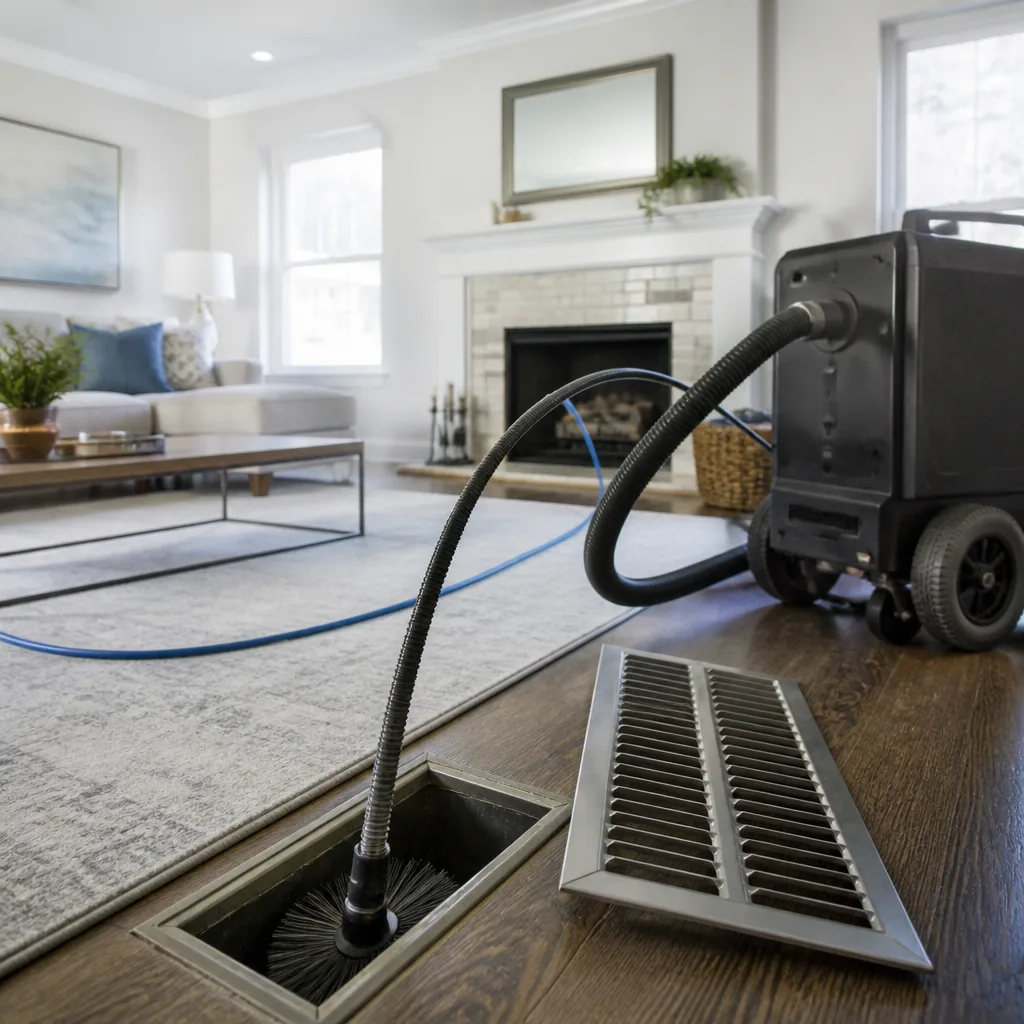 Whole-home duct cleaning
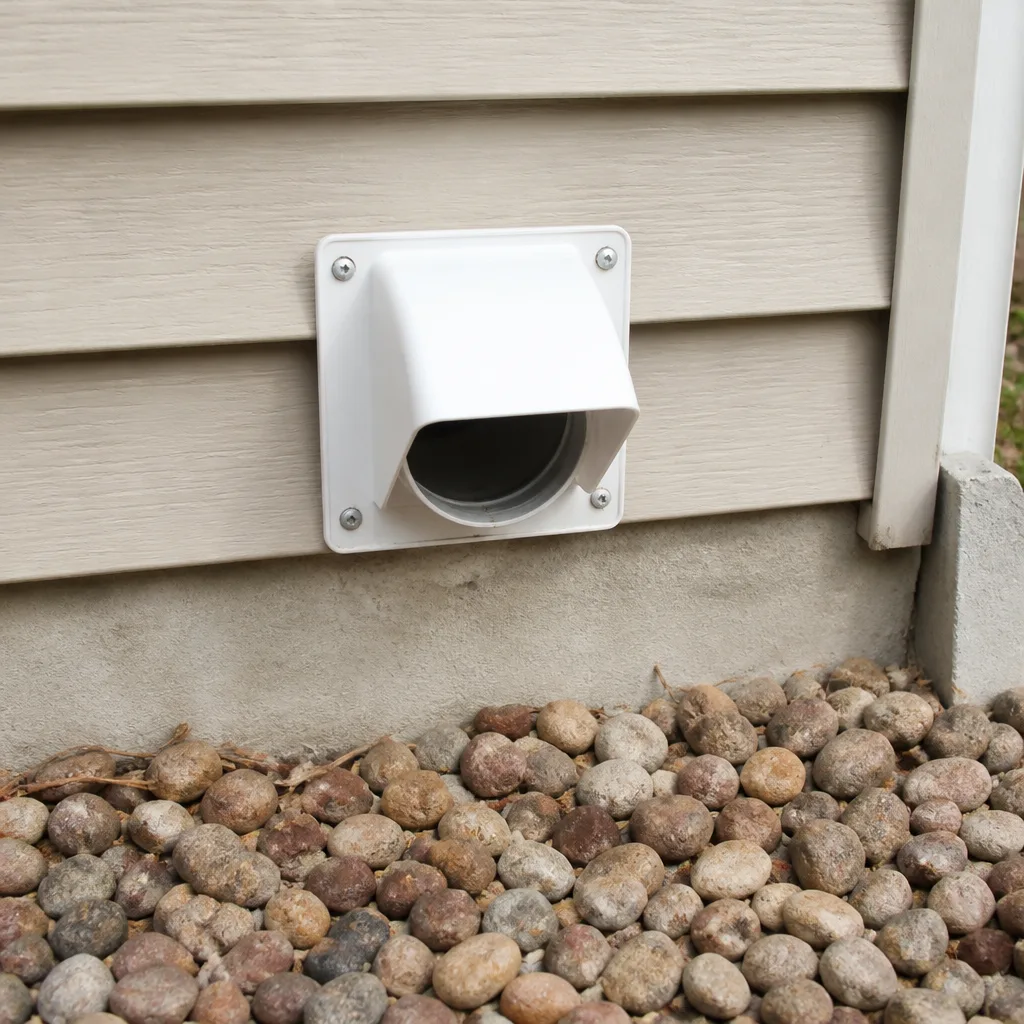 Dryer vent cleaning
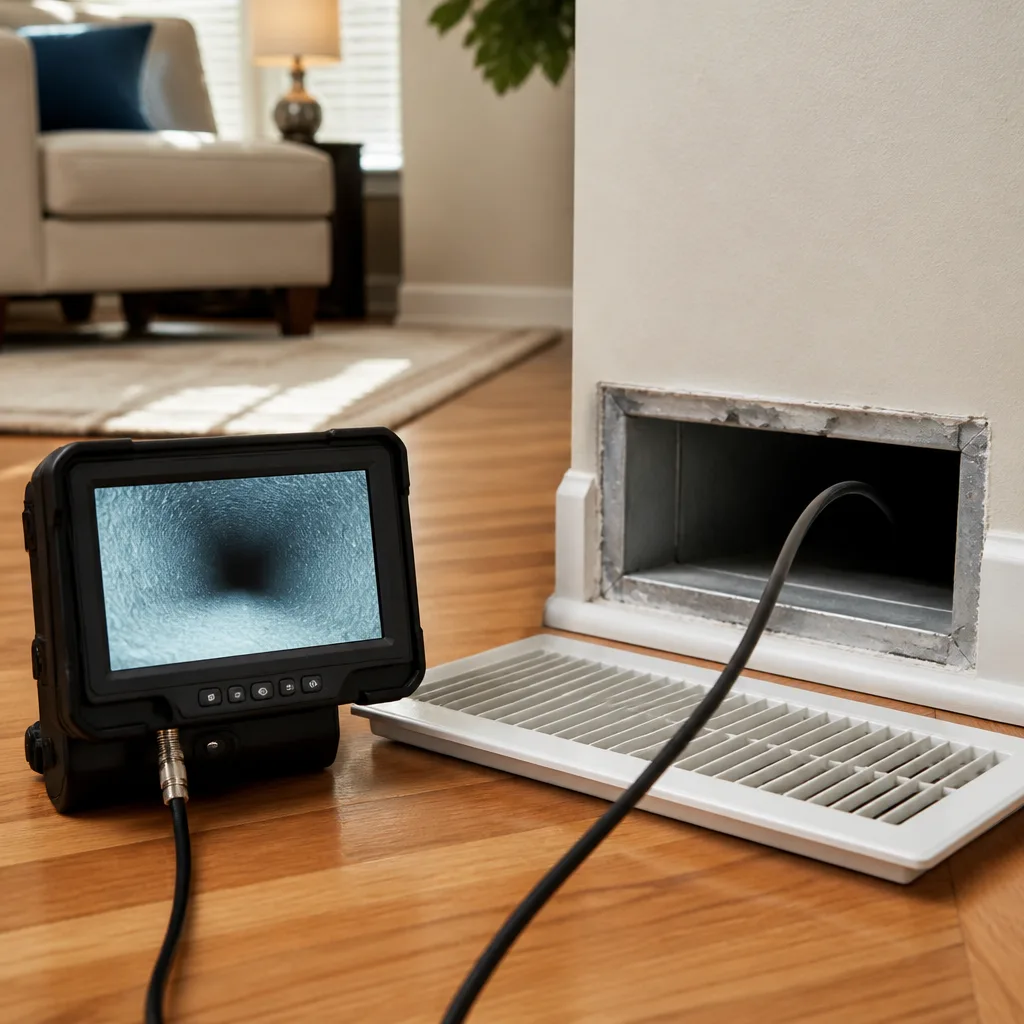 Camera inspection
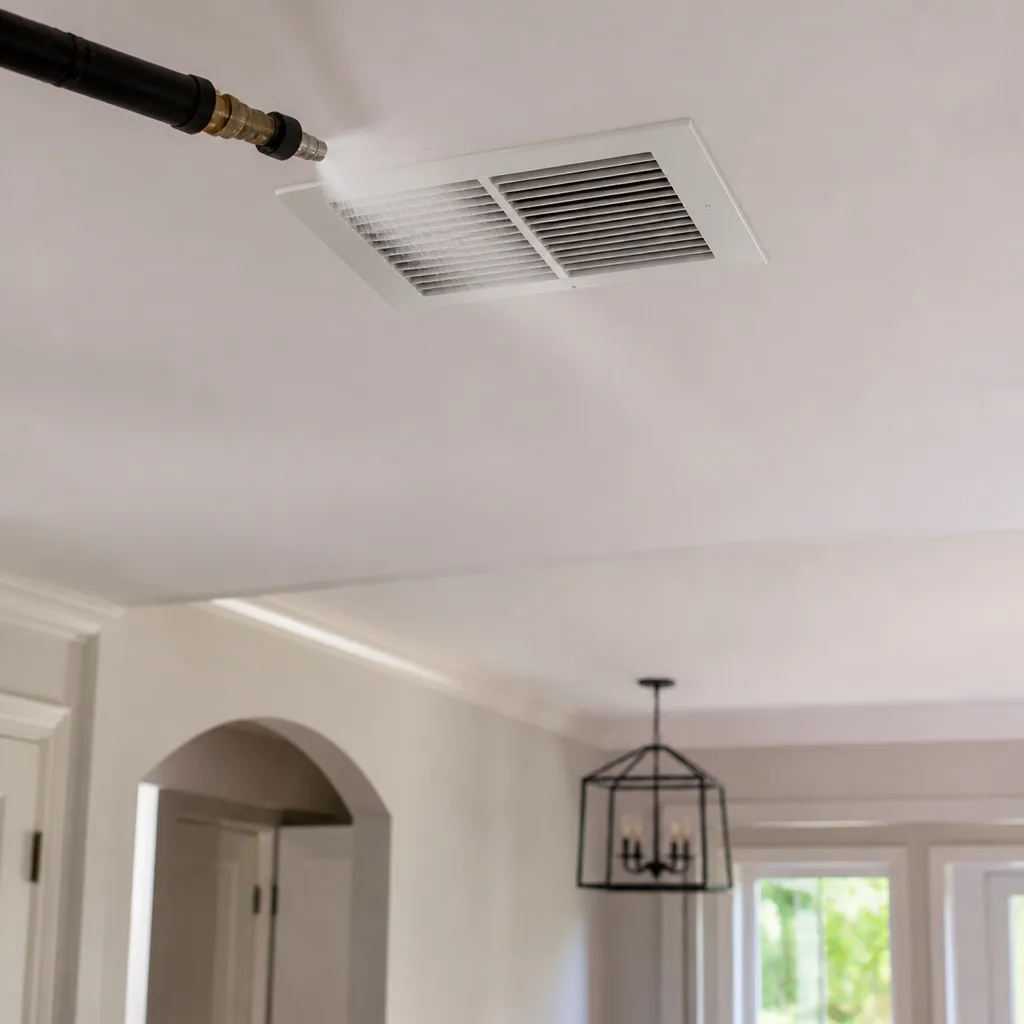 Sanitizing & deodorizing
Whole-system duct and dryer vent check with before-and-after photos - you see exactly what came out of your vents
That "$99 whole-house special" is a bait ad - the real number appears once they are in your hallway, or the "clean" is a shop-vac at the register. We photograph the inside of your ducts before and after instead.
Air Duct Cleaning Troubleshooting in Spring Hill: Common Problems and How to Fix Them
If your allergies are still flaring two weeks after a professional duct cleaning, the job probably wasn’t finished. Not because ducts are hard to clean, but because most cleaning visits end before anyone confirms what’s actually left inside the system. That’s the part nobody tells you about. A cleaning that looks complete from the vent can leave debris sitting in flex-duct runs the wand never reached, or stir up dust that settles right back into the return before the truck pulls away. This guide walks through the specific failures behind the most common duct complaints in Spring Hill, how to tell them apart, and what an actual fix looks like.
Quick Answer
Most post-cleaning duct problems in Spring Hill come down to three things: the wrong equipment for the contamination level, access points placed where the brush or vacuum couldn’t reach the full run, or a job that skipped post-cleaning verification entirely. A real fix means re-inspecting the system with a camera scope, checking static pressure before and after, and looking for moisture sources if odors persist. It’s a diagnostic process, not a do-over.
Styles & brands we work with
- Whole-home duct cleaning
- Dryer vent cleaning
- Camera inspection
- Sanitizing & deodorizing
Table of Contents
- Is It a Dirty-Duct Symptom or a Post-Cleaning Failure?
- Dust Coming Back After a Cleaning: The Negative-Pressure Problem
- What a Real Post-Cleaning Inspection Looks Like
- Why Musty Odors Persist After Cleaning
- Dead Zones in Spring Hill Flex-Duct Construction
- Static Pressure Testing: Did Airflow Actually Improve?
- When the Equipment Doesn’t Match the Contamination
- How to Verify the Work Was Actually Done
Is It a Dirty-Duct Symptom or a Post-Cleaning Failure?
The first step in any troubleshooting is figuring out what you’re actually looking at. A symptom of dirty ducts and a failure of the cleaning itself can look identical from the living room: dust settling on surfaces, a musty smell, allergy symptoms that won’t quit. The difference shows up when you inspect the duct interior and the airflow numbers.
Here’s the distinction that matters. A dirty-duct symptom existed before any cleaning and points to an accumulation problem. A post-cleaning failure appears or persists after a cleaning and points to an execution problem. Those need different responses. Cleaning again won’t fix a job that was done badly the first time unless the second job uses better access and better equipment.
In our experience across Spring Hill homes, the complaints we hear about most often break down into recognizable categories:
- Return vents still dusty a week after cleaning. Usually a sign the return plenum wasn’t cleaned or the system was turned back on before the vacuum finished.
- Allergy symptoms unchanged. Often means the main trunk was cleaned but branch runs were skipped.
- Musty smell that never went away. Almost always a moisture source that cleaning alone won’t address.
- Reduced airflow after cleaning. Rare but real: a dislodged debris chunk or a damaged flex run can restrict flow.
- Visible dust puffing from a vent on startup. A classic sign of debris left in the run closest to the register.
Spring Hill’s humidity is the backdrop for most of this. Homes here run air conditioning for a large share of the year, which keeps the system cycling constantly and moves a lot of air through the ducts. That’s good for filtration in some ways and hard on the ducts in others. Condensation on cold coil surfaces and dust that stays slightly damp are part of why duct problems in Spring Hill tend to involve moisture more than homeowners expect.
Dust Coming Back After a Cleaning: The Negative-Pressure Problem
If dust film returns to your furniture or vents within days of a cleaning, the most likely cause is re-entrainment: debris that was loosened but never captured, then pulled back through the system when the air handler restarted. This is the single most common reason a cleaning “doesn’t take.”
The mechanism is straightforward. A cleaning method that agitates dust without simultaneously holding the system under negative pressure just moves contamination from the ducts into the living space. The brush knocks it loose, the vacuum fails to capture it, and the blower distributes it. Proper professional cleaning prevents this by maintaining negative pressure throughout the job so loosened debris travels toward the vacuum, not toward your bedroom.
This is why we pair Rotobrush rotary brush agitation with Nikro HEPA-rated vacuum extraction. The brush does the work of breaking contamination off duct walls, and the HEPA vacuum captures it at the source. Neither half works well alone. Brush without capture is a dust storm. Capture without agitation leaves the adhered layer in place.
For jobs involving heavier contamination, allergen loads, or post-construction debris, we bring Abatement Technologies equipment on site. That equipment is built for true negative-air containment and HEPA-level particulate capture, which is what a contamination-level job actually requires. If a previous cleaning left you with more dust than you started with, this is usually the missing piece.
Two checks tell you whether re-entrainment happened:
- Look at the supply registers. A light, even film of fine dust that reappears within a few days points to re-entrainment.
- Look at horizontal duct surfaces near the air handler if they’re accessible. Fresh dust settling on surfaces that were cleaned means capture failed during the job.
If both checks point the same way, the fix is a full cleaning with proper negative-pressure equipment, not another spot pass.
What a Real Post-Cleaning Inspection Looks Like
A real post-cleaning inspection uses a camera scope pushed into the ductwork to look at surfaces the eye can’t reach from a vent. A visual glance from a register tells you almost nothing about the condition of the run behind it.
From a register, you can see maybe the first twelve inches of a branch run, and only if the light is right. The contamination that matters is usually deeper: at the plenum transitions, along the inside curve of an elbow, and in the last few feet before the register where airflow slows and debris drops out. A camera scope is the only practical way to see those surfaces after a cleaning.
What a proper post-cleaning scope check covers:
- Main trunk and plenum. The largest volume of air passes here, so this is where left-behind debris does the most damage.
- Branch runs and elbows. Debris collects on the inside curve of elbows, which are easy to miss without a scope.
- Return side. The return carries debris into the system, so it deserves the same scrutiny as the supply.
- Air handler connection point. Loose debris here can be pulled directly into the blower and coil.
The difference between a scope check and a glance is verification. A tech who glances into a register and says “looks clean” hasn’t inspected anything. A tech who runs a camera through each branch and shows you the footage has. In Spring Hill homes where the attic ductwork runs long and flex-heavy, that footage is what tells you whether the whole system was actually reached.
Ask for the footage. If a cleaning company can’t produce before-and-after photos of your own ducts, that’s the answer to how the job went. We document every job with before-and-after photos for exactly this reason.
Why Musty Odors Persist After Cleaning
A musty smell that survives a duct cleaning almost always points to a moisture or microbial source that cleaning alone can’t fix. Surface contamination can be cleaned. A wet evaporator coil, standing water in a drain pan, or condensation in an uninsulated duct section is a different problem, and the odor will return within days if the moisture source stays.
Spring Hill’s climate is the reason this comes up so often here. The air conditioning runs for long stretches, which keeps the coil cold and, when drainage is poor, wet. A dirty coil plus the humidity that never really leaves means mold spores have a comfortable place to grow and an easy path into the airstream. Cleaning the ducts without addressing the coil or the drain does nothing about the smell.
Where to look when the odor persists:
- Evaporator coil and drain pan. Look for standing water, slime in the drain line, or a dark film on the coil fins.
- Duct insulation. Wet or compressed insulation in an attic duct run can hold moisture and odor for a long time.
- Air handler closet. A damp closet with restricted airflow keeps everything in it humid.
- Return plenum near a bathroom or kitchen. Sometimes the “duct smell” isn’t coming from the ducts at all.
If you find a moisture source, that has to be resolved before a re-clean, or the smell will come right back. Our scope at Duct Cleaning Spring Hill is air duct cleaning and air duct cleaning repair, so when we find a damaged or damp section, we can address the duct problem and point you to the HVAC side for anything beyond our scope. The point is to find the actual source rather than scrub the symptom.
Dead Zones in Spring Hill Flex-Duct Construction
Dead zones in flex-duct runs are sections of duct that no amount of cleaning reaches because the access points were placed wrong. They’re especially common in the flex-heavy attic construction typical of a lot of Spring Hill homes, where duct runs sag and bend between joists and can’t be swept in a straight line.
Flex duct doesn’t behave like rigid sheet metal. It dips between supports, it compresses at turns, and it has natural low points where debris collects and stays. A cleaning that places an access hole at each end of a run and sweeps toward the middle will miss every sag point in between, because the brush and vacuum never reach the low spots. The run looks clean from both ends and isn’t clean in the middle.
The fix is access placement based on the actual geometry of the run. A proper cleaning plan for a flex-duct system looks at:
- Where the run starts and ends.
- Where the sag points and direction changes are.
- Where the run passes through a hot attic space or a tight joist bay.
- Whether the run can be reached from an access hole on each side of a sag, or whether it needs to be pulled and cleaned.
The three items above are usually invisible unless the tech gets into the attic and maps the runs before cutting anything. That’s the work. A cleaning crew that doesn’t map the run first is guessing about where to put access, and the guess is usually generous to the clock.
If you’ve had your ducts cleaned and still find grime in the low points of a flex run, or find dust settling on furniture nearest one particular room, this is the likely cause. The right answer is a proper access plan and a second cleaning that actually reaches the dead zones. This is the kind of thing we fix routinely in Spring Hill, and it’s worth seeing the duct map before any work starts.
Static Pressure Testing: Did Airflow Actually Improve?
Static pressure testing measures the resistance to airflow inside the duct system, and it’s the only reliable way to confirm that a cleaning actually improved performance rather than just tidied things up. A cleaning can look thorough and still leave the system’s airflow numbers unchanged.
Static pressure is measured in inches of water column, taken at points along the supply and return sides. High static pressure means the blower is working against resistance: undersized ducts, closed dampers, crushed flex runs, or heavy contamination. A cleaning that opens up the system should reduce that resistance measurably. If it doesn’t, either the contamination wasn’t the bottleneck or something else is restricting flow.
Why this matters for troubleshooting: many homeowners assume a cleaning will fix a comfort problem like a hot upstairs bedroom or a weak register in the far room. Sometimes it does, because the contamination was the restriction. Sometimes it doesn’t, because the restriction is a crushed or undersized duct, a design issue, or a closed damper the homeowner never noticed. Without a before-and-after measurement, nobody knows which one you had.
Pressure checks worth requesting on any cleaning:
- Baseline static pressure before cleaning. Records the starting point so improvement can be measured.
- Static pressure after cleaning. Confirms the system actually opened up.
- Individual branch readings if you have one problem room. Tells you whether that run is restricted internally or just undersized.
Not every cleaning visit includes static pressure testing. It’s worth asking for, especially on older systems or if your main concern is airflow rather than dust. In Spring Hill’s long cooling season, airflow that’s even slightly restricted shows up on the energy bill, so it’s a measurement worth having.
When the Equipment Doesn’t Match the Contamination
Equipment mismatch is the quiet failure mode: a cleaning that used consumer-grade equipment on a job that needed professional-grade capture, or a routine-targeted machine on a contamination-level system. The truck showed up, the equipment ran, and the contamination is still there.
A single consumer-grade vacuum connected to one register creates a weak pull that can’t reach deep into a long run. It doesn’t put the ductwork under real negative pressure. It doesn’t agitate debris off duct walls. On a system with light surface dust, it can make a visible difference. On a system with adhered contamination, allergen load, mold spores, or post-construction drywall dust, it makes almost no difference at all.
Professional cleaning works as a system, not a single tool. The core method most duct-cleaning specialists rely on is brush-agitation plus HEPA extraction: aggressive mechanical action to break contamination off the duct walls, combined with high-efficiency capture to remove it from the air. Rotobrush handles the agitation. Nikro HEPA-rated equipment handles the capture. Neither works without the other.
When the contamination level is higher than routine, the job needs the equipment to match. We bring Abatement Technologies equipment to those jobs because that class of equipment is built for true negative-air containment and HEPA-level particulate capture. It’s the difference between cleaning a duct and treating a contaminated system.
Filter and IAQ systems are part of the same picture. Homes here often run Honeywell or Aprilaire filtration and humidity control, and those systems interact with the ducts. A cleaning that ignores the filter setup can push debris into a filter housing that never gets cleaned, or interfere with a bypass humidifier setup. Understanding how the ducts, the filter, and the air handler work together is why we treat IAQ knowledge as core training rather than a separate discipline.
How to Verify the Work Was Actually Done
Verification is how you answer the question that matters most after any cleaning: did the work actually happen, or did the truck just leave? Here’s what to ask for and what to look at before you pay.
Ask for documentation before the cleaning starts, not after. The scope of work should say which runs will be accessed, whether access holes will be cut and sealed, and what equipment will be used. Vague scopes make vague jobs.
- Before-and-after photos of your own ducts. Not stock photos. Not photos from someone else’s job. Your ducts, dated, from the same angles.
- A camera-scope video or footage of each major run. Confirms the full run was reached, not just the first twelve inches.
- Static pressure readings before and after, if airflow was part of the concern.
- Confirmation that access holes were properly sealed after cleaning, since an unsealed hole pulls attic air and dust into the system.
- Written results of what was found, including anything that turned out to be outside the duct system (coil, drain, insulation).
Spring Hill homeowners should expect all five from a professional job. If any of them is missing, that’s the point at which to ask questions before signing off. This is the verification standard we hold ourselves to, and it’s also the standard to hold any cleaning company to.
If you’ve had a cleaning and never saw a single photo, the right next step is an inspection, not another cleaning. The inspection tells you what state the system is actually in. Only then is another cleaning worth paying for.
Common Mistakes to Avoid
- Assuming a second cleaning will fix a bad first one. It won’t if the second cleaning repeats the same access and equipment. Ask what will be different before agreeing to a re-clean.
- Ignoring moisture after a musty-odor complaint. Cleaning ducts without addressing a wet coil, drain, or damp insulation guarantees the smell returns within days in Spring Hill’s humidity.
- Accepting a register-glance inspection as verification. A glance can’t see twelve inches past the register. The surfaces that matter are deeper in the run, and a camera scope is the only way to reach them.
- Letting access holes go unsealed. An unsealed cut in flex duct pulls attic air and insulation fibers into the system and can be worse than the dirt it was meant to remove.
- Cleaning without inspecting airflow first. A comfort problem that’s actually caused by a crushed or undersized duct won’t improve with cleaning. Measure static pressure first so the fix matches the symptom.
- Skipping the return side. The return pulls debris into the system. A cleaning that only addresses supply vents leaves half the problem in place.
- Believing a same-day cleaning without documentation. If the tech can’t show you dated before-and-after photos of your own ducts, there’s no evidence the work was done.
See the difference
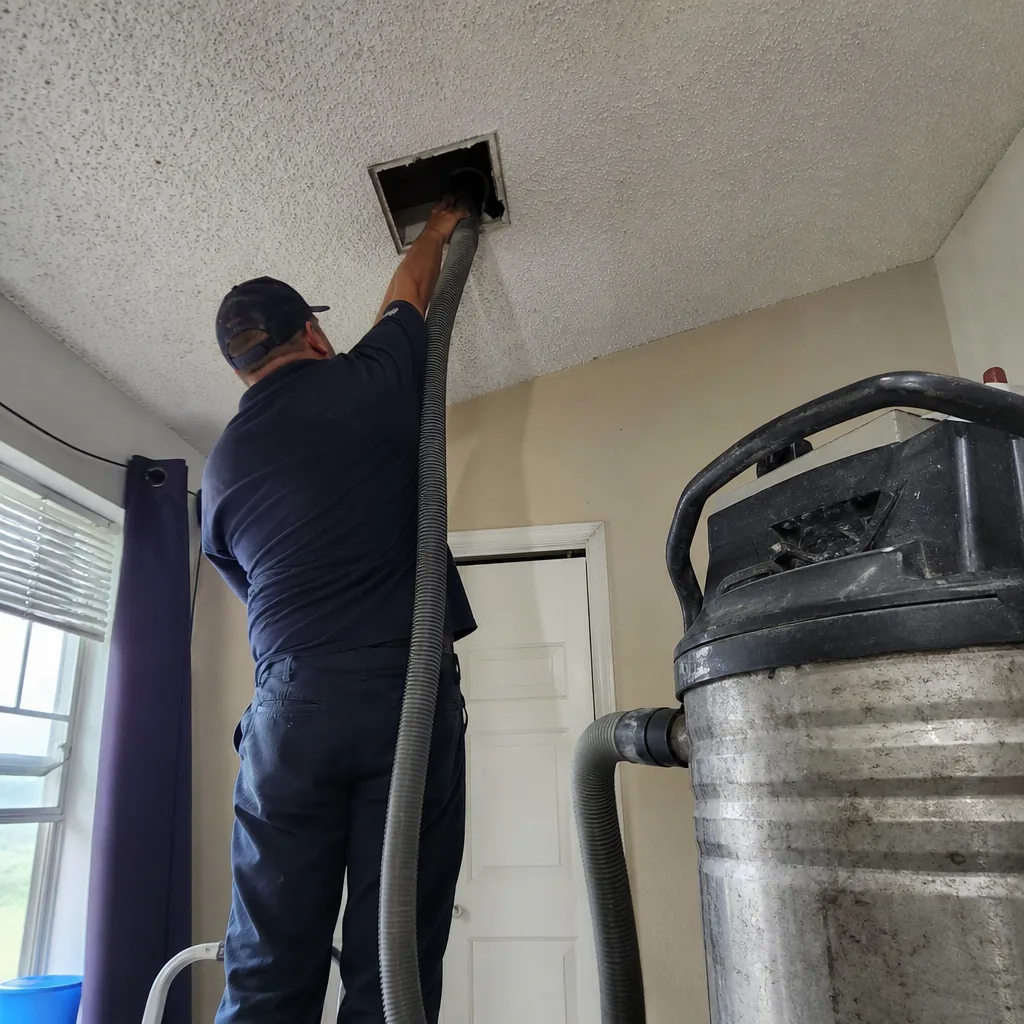 Before
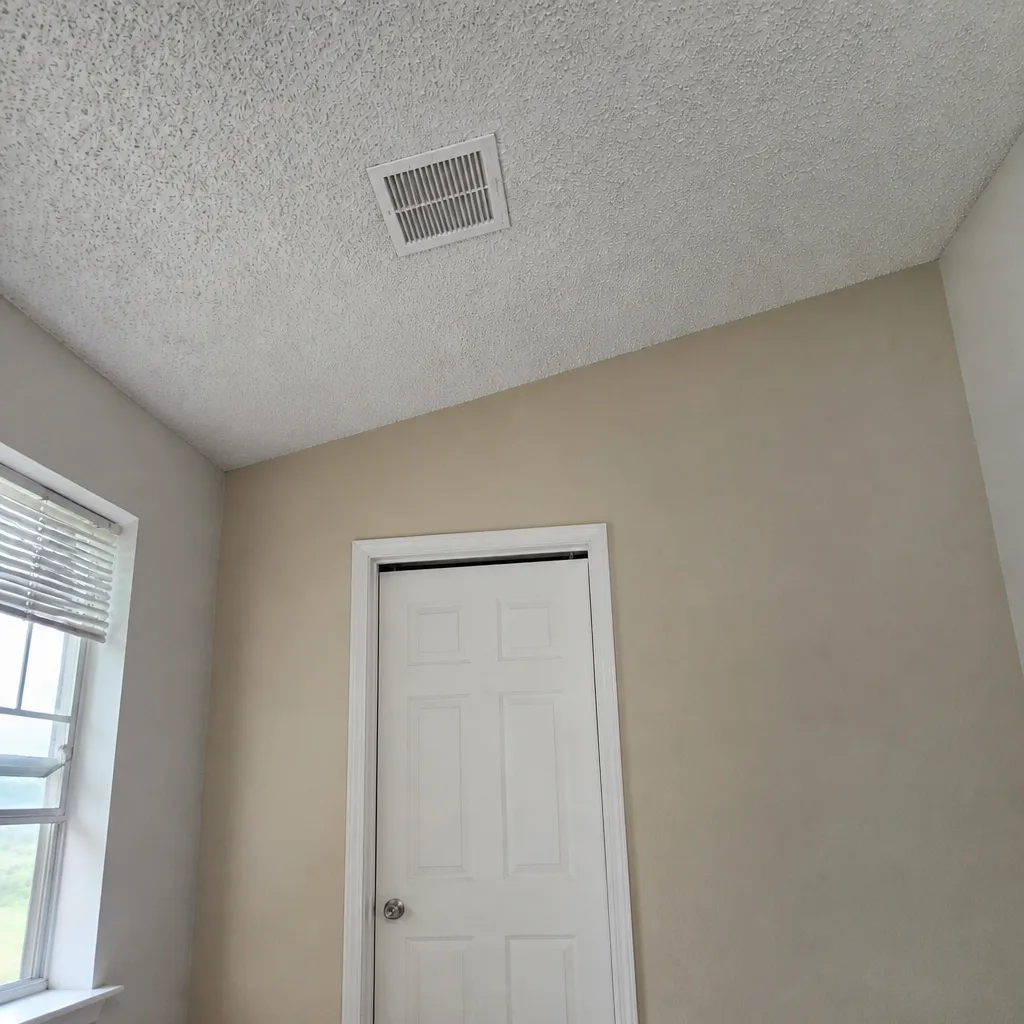 After
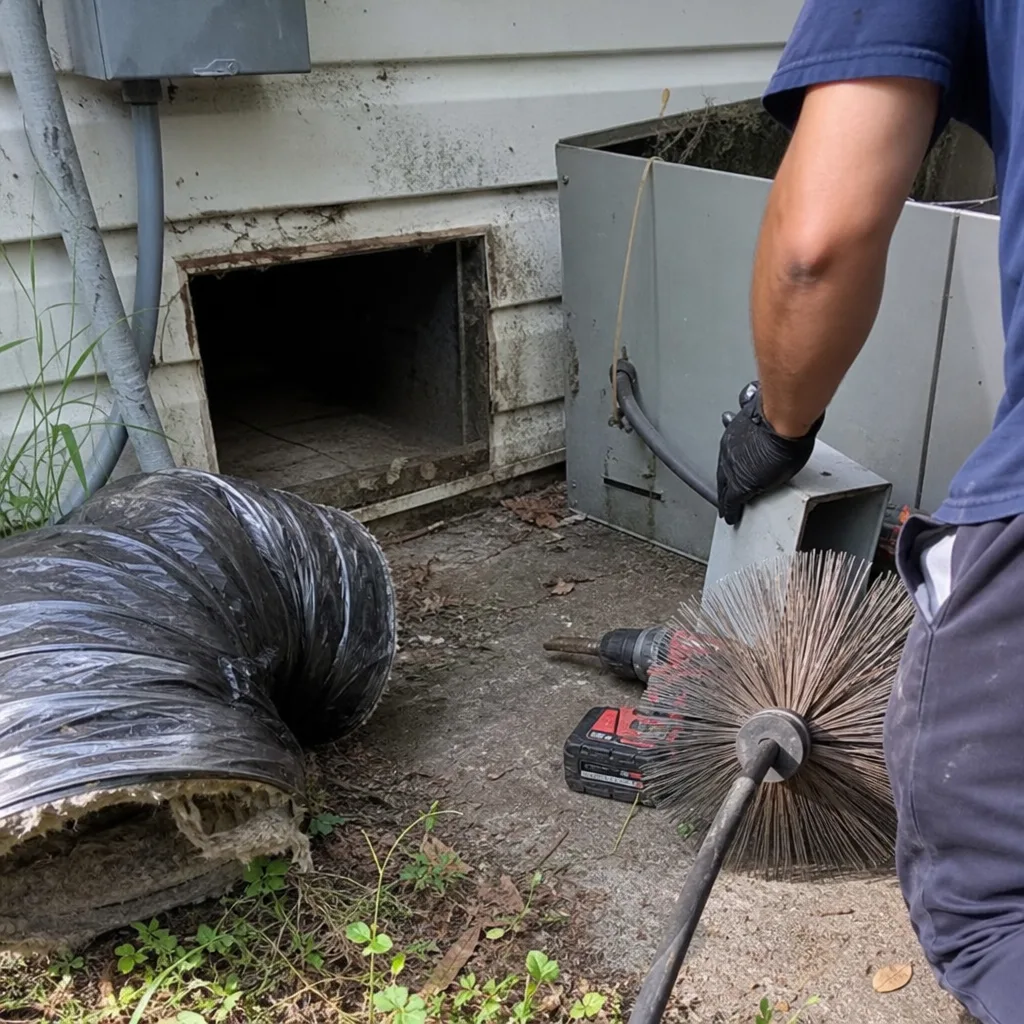 Before
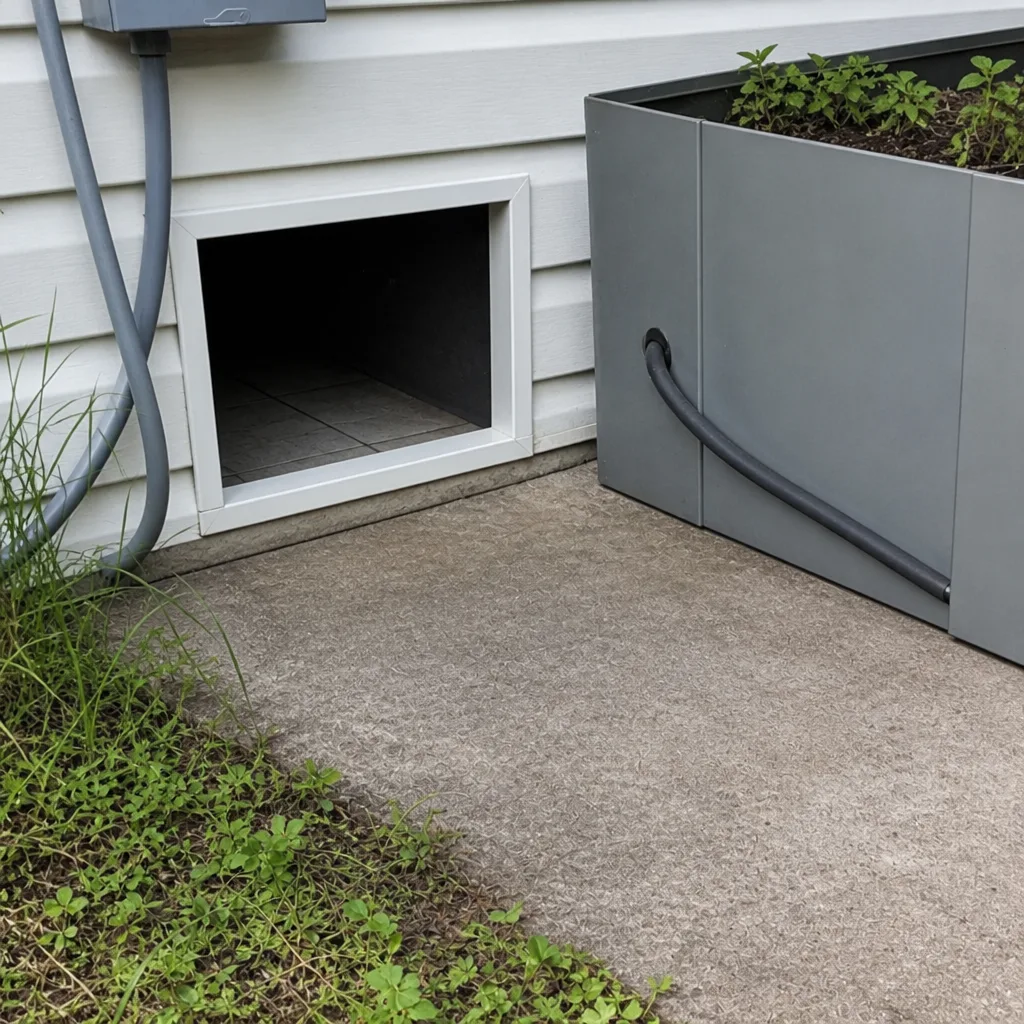 After
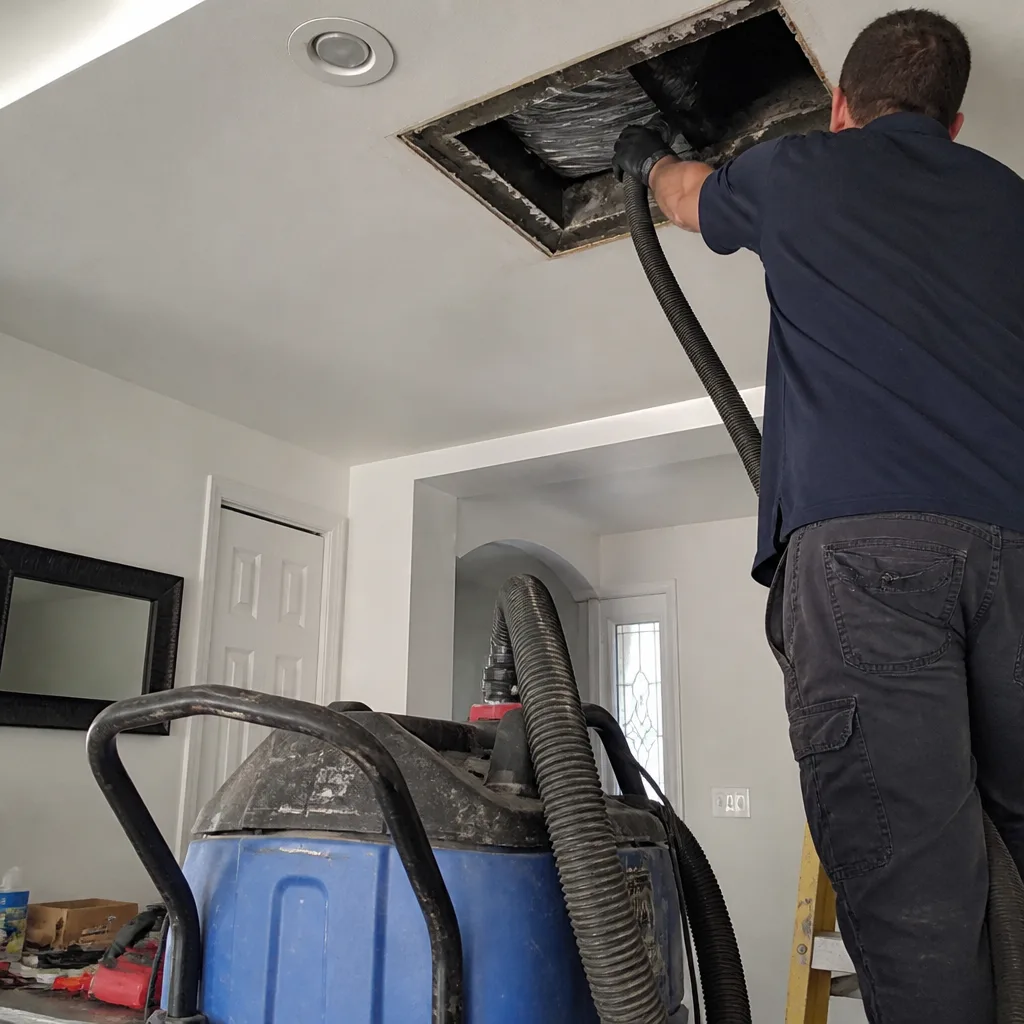 Before
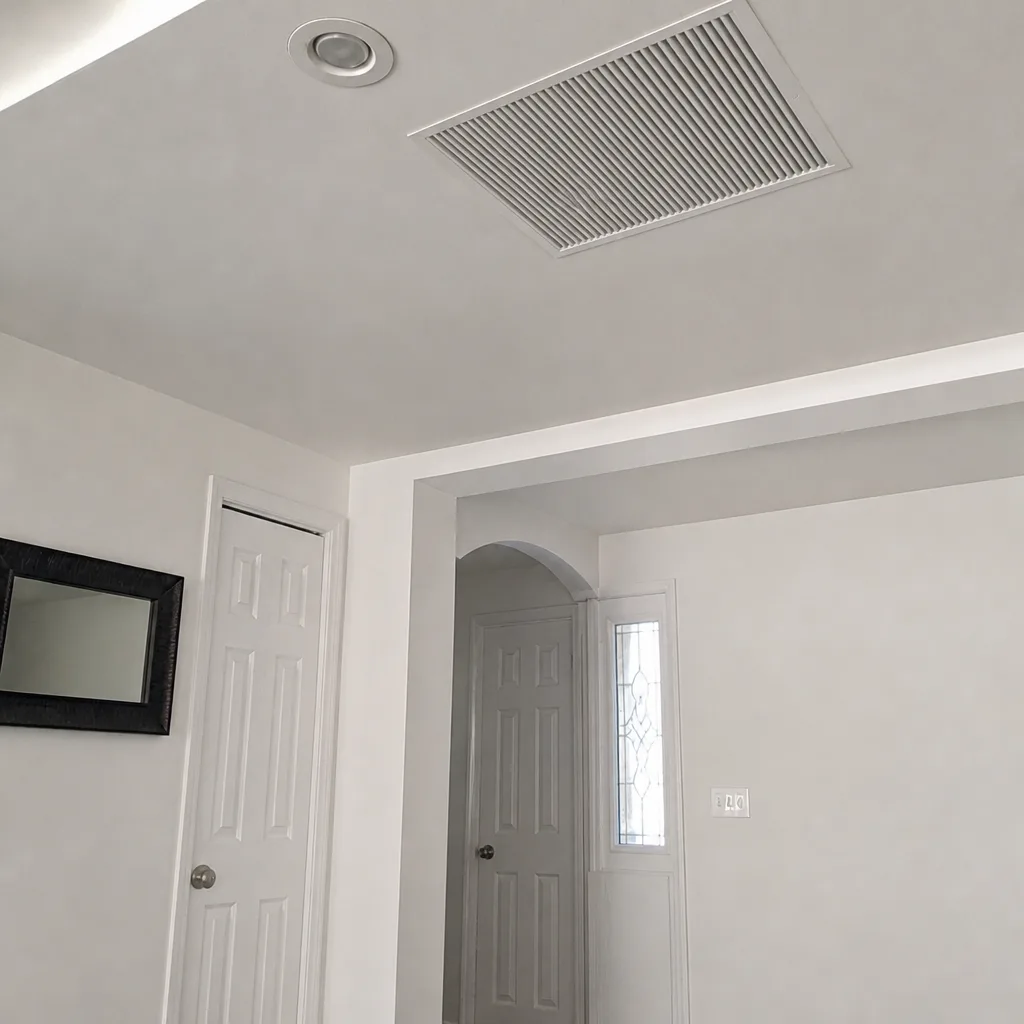 After
When to Call a Professional
Call a professional when the problem you’re troubleshooting is one of the four hard cases above: re-entrainment, dead zones from bad access, persistent odors from a moisture source, or airflow that hasn’t improved. Those are cases that no amount of extra cleaning from weaker equipment will fix, and each needs inspection before another dollar is spent. Our technicians have up to 9 years of experience with duct systems specifically, which is why we use Rotobrush, Nikro, and Abatement Technologies equipment on the jobs that need it. We answer 24/7. Fast dispatch from 7am to 7pm, Sunday through Friday. Duct Cleaning Spring Hill offers free estimates in Spring Hill, so call (833) 858-5701 and we’ll start with a proper inspection.
Frequently Asked Questions
Get before-and-after photos of your own ducts and a camera-scope look at each major run. If the company can’t show you dated documentation of your ducts specifically, you’re working from a claim rather than evidence. A static pressure reading before and after adds confirmation that airflow actually changed. Call (833) 858-5701 for an inspection if you had a cleaning and never saw any documentation. Estimates are free.
Dust return after cleaning is almost always re-entrainment: debris loosened during the job but not captured by the vacuum, then pushed back through the system when the blower restarted. The fix is a re-clean with proper negative-pressure equipment. Rotobrush brush agitation paired with Nikro HEPA extraction is the method that prevents it. If a prior cleaning left you with more dust than you started with, call (833) 858-5701 and we’ll scope the system to confirm. Estimates are free.
Check for a moisture source before considering another cleaning. A wet evaporator coil, a blocked drain pan, or damp duct insulation holds odor and re-supports growth within days. Cleaning surface contamination without fixing the moisture source won’t hold in Spring Hill’s humidity. Call (833) 858-5701 and we’ll scope the ducts to locate the source. Estimates are free.
Reduced airflow to one room after a cleaning usually means debris was dislodged into a branch run and left there, or a duct was disturbed during the job. A static pressure reading at that branch will tell you whether the run is restricted internally or undersized from the start. Call (833) 858-5701 for an airflow inspection. Estimates are free.
Yes. A visual glance from a register shows you a few inches at most. The plenum transitions, elbows, and sag points where contamination actually collects are only visible with a scope. Scope footage after cleaning is how you know the entire run was reached. Call (833) 858-5701 if you’d like a scoped inspection before deciding on another cleaning. Estimates are free.
Clean ducts generally don’t change the recommendation based on location alone: most homes need cleaning every few years, sooner after a renovation, a pet addition, or a visible dust or odor problem. What matters more in Spring Hill’s climate is confirming the cleaning actually worked rather than relying on a calendar. Ask for verification, then schedule the next one based on what the scope shows.
The Bottom Line
Most duct-cleaning “problems” in Spring Hill aren’t problems with the ducts. They’re execution failures: the wrong equipment for the contamination, access points that missed the dead zones, or a job that ended without a single photo or pressure reading. Diagnose first. Camera-scope the runs, check static pressure, look for moisture when odors persist, and demand the documentation that tells you the work happened. Then the fix matches the symptom, and the cleaning lasts. Duct Cleaning Spring Hill offers free estimates in Spring Hill. Call (833) 858-5701. We answer 24/7. Fast dispatch from 7am to 7pm, Sunday through Friday.
Written by the team at Duct Cleaning Spring Hill.