
Last updated November 15, 2026
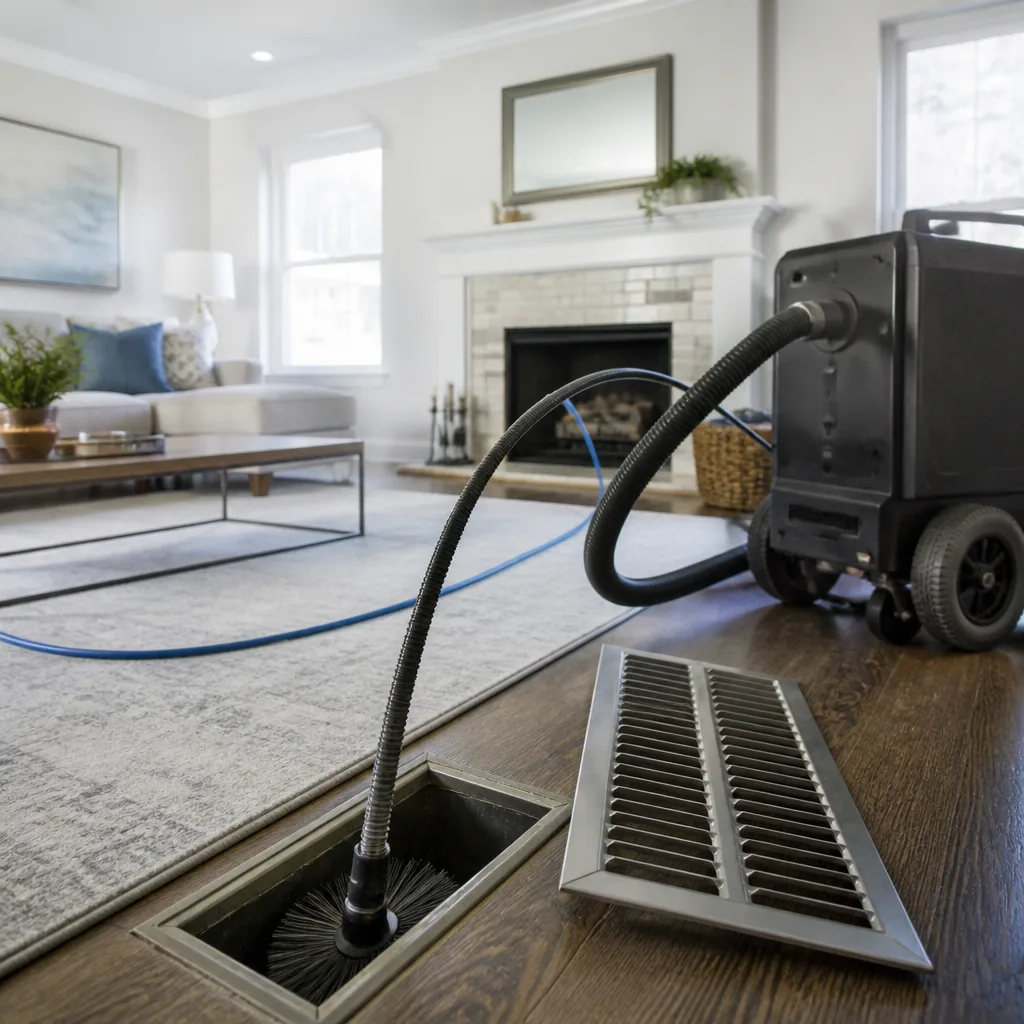 Whole-home duct cleaning
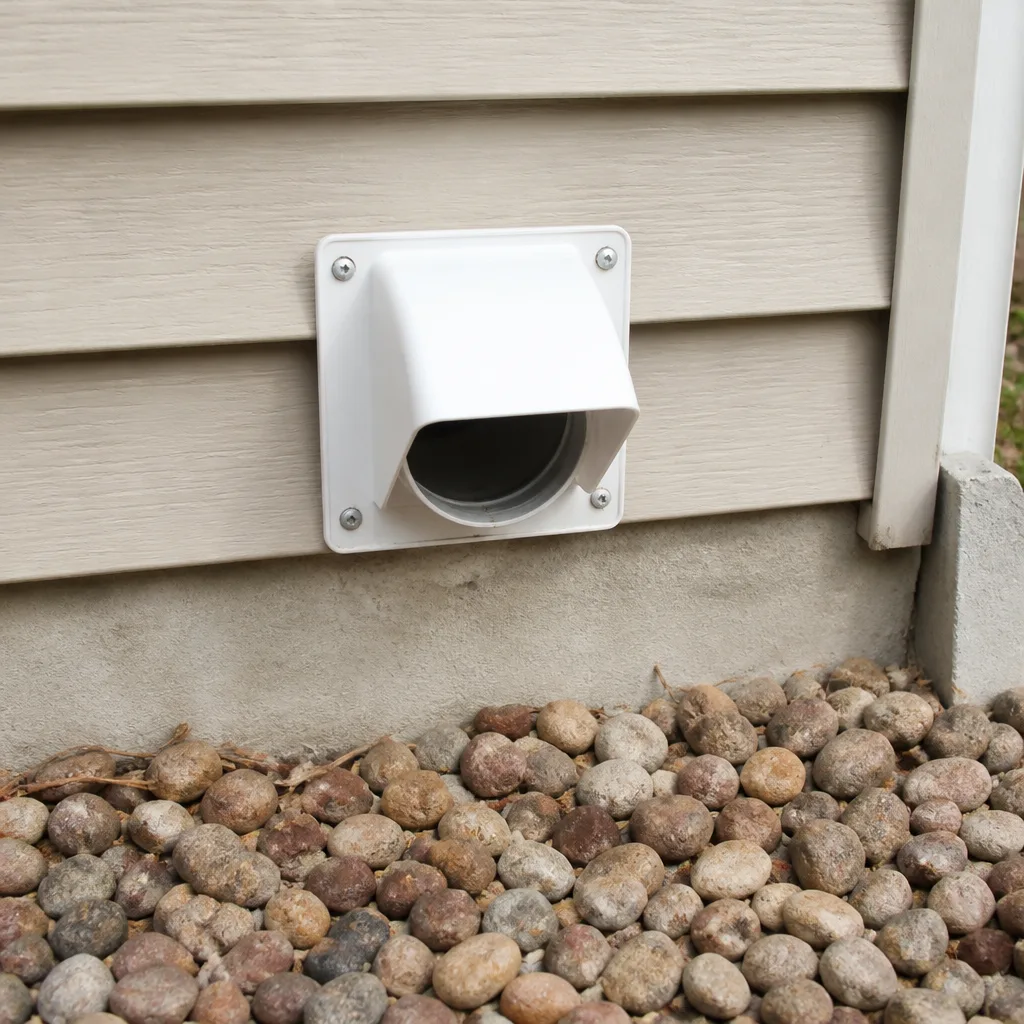 Dryer vent cleaning
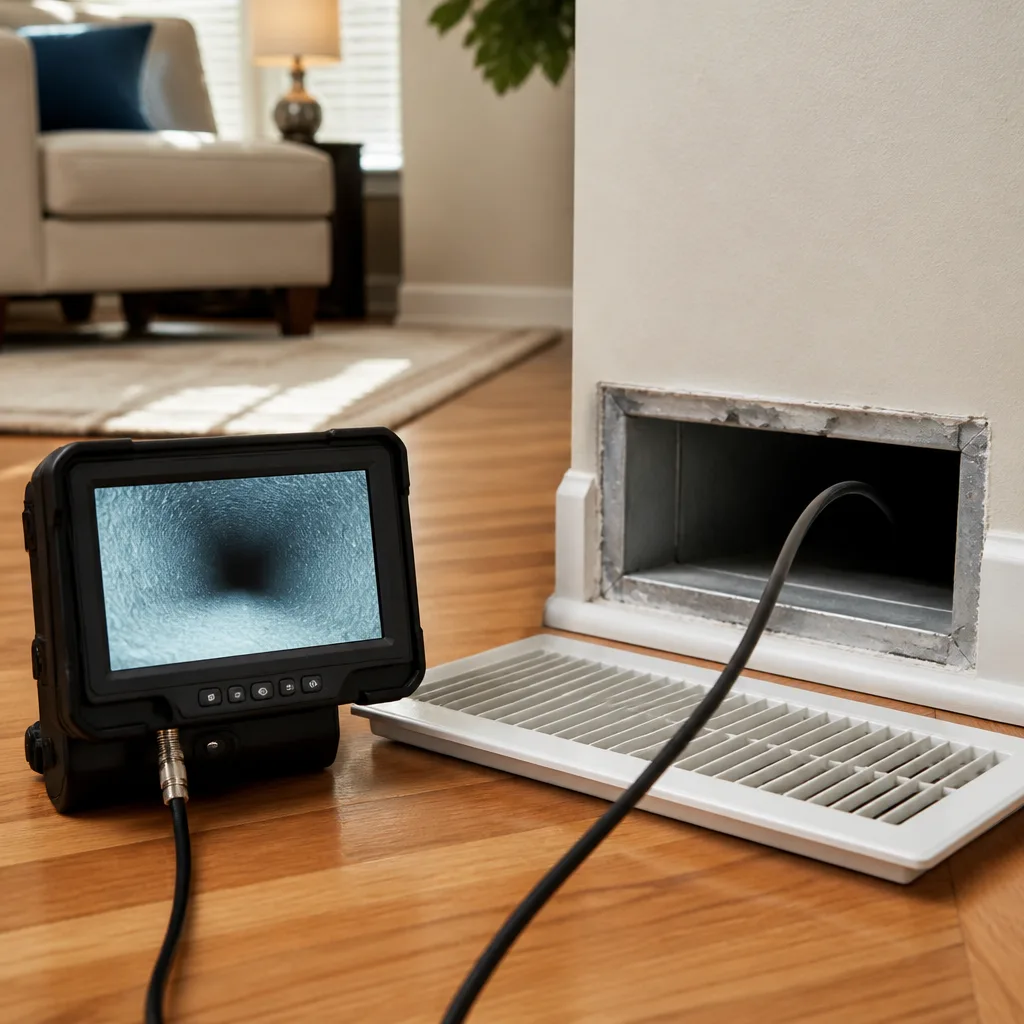 Camera inspection
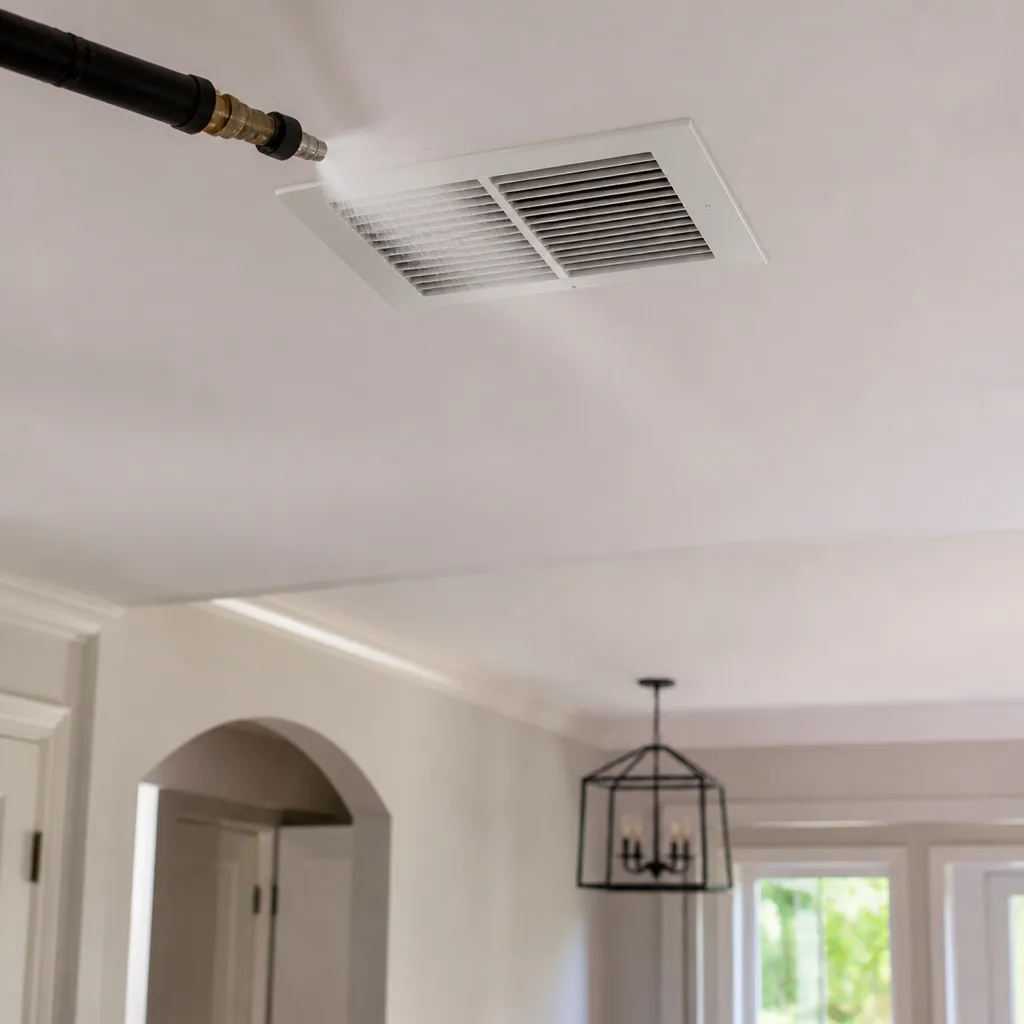 Sanitizing & deodorizing
Whole-system duct and dryer vent check with before-and-after photos - you see exactly what came out of your vents
That "$99 whole-house special" is a bait ad - the real number appears once they are in your hallway, or the "clean" is a shop-vac at the register. We photograph the inside of your ducts before and after instead.
How to Hire an Air Duct Cleaning Contractor in Spring Hill: A Step-by-Step Guide
Most people hiring a duct cleaner think they’re shopping for a price. They’re actually shopping for equipment, process, and accountability, and the price is just what those three things cost. That’s the uncomfortable part. In Florida, duct cleaning has low barriers to entry: buy a vacuum, print a coupon, and you’re in business. The EPA has warned consumers for years about “$99 whole-house specials” run on consumer-grade equipment by operators who leave before the job is finished, and those operators stay active in Hernando County because homeowners don’t yet know what to ask. This guide changes that. You’ll learn exactly what to ask about equipment, credentials, and documentation, and how to tell a real duct specialist from a coupon with a truck.
Quick Answer
To hire an air duct cleaning contractor in Spring Hill, ask four questions before you book: what agitation tool they use, what vacuum captures the debris (and at what filtration level), whether they’ll do a camera inspection and provide before-and-after documentation, and how to verify their Florida business registration. A legitimate contractor answers all four without hesitation, quotes a flat price for the whole system after assessing it, and hands you a written scope of work before any equipment comes off the truck.
Styles & brands we work with
- Whole-home duct cleaning
- Dryer vent cleaning
- Camera inspection
- Sanitizing & deodorizing
Table of Contents
- Why Duct Cleaning Is a High-Risk Purchase in Florida
- What NADCA Membership Actually Requires (And What It Doesn’t)
- The Equipment Questions That Separate Specialists From Coupon Operations
- Red Flags in the Quote Process
- How to Verify a Contractor’s Florida Business License
- What a Legitimate Post-Cleaning Report Should Include
- The Step-by-Step Hiring Process
- Common Mistakes to Avoid
- When to Call a Professional
- Frequently Asked Questions
Why Duct Cleaning Is a High-Risk Purchase in Florida
Duct cleaning is one of the few home services where the consumer can’t see the result. You can’t climb into your supply trunk. You can’t tell by looking whether the return plenum was brushed or just blown out. That information gap is exactly what bad actors exploit, and in Florida the gap is wider than in most states because of how the industry grew. Low startup costs, no statewide licensing specific to duct cleaning, and a year-round cooling season that keeps HVAC systems running long enough to accumulate serious debris all create a market where a $79 coupon can beat a $600 proper job on the homeowner’s spreadsheet, until the homeowner realizes nothing was actually cleaned.
In Spring Hill specifically, the housing stock adds a wrinkle. Much of the area’s residential construction is slab-on-grade with ductwork running through the attic, and Florida’s humidity means those attic ducts cycle through condensation and drying constantly. Dust that settles inside a duct in a dry climate stays loose. Dust that settles in a humid attic duct can cake onto the interior walls and, in some conditions, support microbial growth. That’s not a reason to panic. It’s a reason to care who you hire, because a blowout with a shop vac doesn’t remove adhered material, and it can aerosolize it into the living space instead.
This guide is written from Spring Hill, by a company whose entire scope is duct systems. We’ve seen what happens when the wrong contractor gets hired first. Our goal here is to give you a framework that works whether you call us or someone else, because a homeowner who asks the right questions usually ends up with a cleaner system no matter who shows up.
What NADCA Membership Actually Requires (And What It Doesn’t)
NADCA, the National Air Duct Cleaners Association, publishes the ACR standard, which stands for Assessment, Cleaning, and Restoration of HVAC systems. It’s the reference document the industry uses to define what “clean” means and how the work should be done. Companies that hold NADCA membership have committed to that framework, and their technicians are expected to be trained and tested against it. That’s meaningful. It’s not the same as a certification for the individual who shows up in your driveway, and the difference matters when you’re evaluating a quote.
Here’s what trips people up. Plenty of contractors claim “NADCA-compliant” or “NADCA standards” without holding membership. Those phrases cost nothing to type on a website. Membership is verifiable, and you should verify it directly on NADCA’s own directory rather than trusting a badge on a truck. What follows from membership is a set of practices you can then use to evaluate the crew regardless of whether they belong:
- A source-removal approach rather than a blow-and-go approach. Debris is agitated and captured, not simply disturbed.
- Containment at the openings so the cleaning doesn’t redistribute dust into the room.
- Negative pressure in the ductwork during cleaning, so air flows toward the collection unit instead of into your living room.
- Access openings created and properly sealed, not holes left behind.
- A post-cleaning verification step, ideally documented.
Membership is a starting filter, not a finish line. Plenty of decent contractors aren’t members, and a handful of members still run thinner equipment than you’d want. Use membership as one input, then ask the equipment questions in the next section, because that’s where the real answer lives. If you want a company that operates to that standard in this market, we’re one of the options worth putting on your shortlist.
The Equipment Questions That Separate Specialists From Coupon Operations
This is the section most homeowners skip, and it’s the one that determines whether your ducts actually get cleaned. Duct cleaning has two jobs that must happen together: loosening what’s stuck to the duct walls, and capturing it without releasing it into your home. A single machine usually does one well and the other poorly. That’s the crux of why “we use a HEPA vacuum” isn’t enough of an answer.
What agitation system do you use?
Ask specifically. The best answer names a rotary brush or air whip with contact agitation at the duct wall. Rotobrush is a well-known rotary brush platform, and the reason it shows up on professional trucks is that the spinning brush physically contacts the duct surface and drives debris loose. A plain vacuum hose pushed through a duct pulls loose dust. It doesn’t touch what’s adhered. If the contractor’s answer is vague or sounds like a shop vac accessory, that’s your signal to keep interviewing.
What negative air machine and CFM rating?
CFM, cubic feet per minute, is the volume of air the machine pulls. A unit with a low CFM can’t maintain negative pressure in a duct system while a brush is knocking material loose, so the material just floats back into the house. Ask what CFM their negative air machine is rated at. A contractor who knows their equipment knows the number. If they can’t tell you, they don’t know their equipment.
What HEPA filtration is on the collection unit?
HEPA-level filtration on the collection unit is what stops fine particulate from being exhausted back into your home. Nikro builds HEPA-rated vacuum systems used widely in the trade, and Abatement Technologies builds containment-grade equipment used where particulate capture has to be tight. For a routine cleaning in a Spring Hill home with pets or allergy-sufferers, you want HEPA on the collection unit as a baseline. For jobs involving post-construction debris, visible mold spores, or heavy contamination, negative-air-pressure containment matters even more, and a contractor without that equipment simply can’t do the job safely. Our technicians have up to 9 years of experience with this class of equipment, and the scope of what we can do is set by what’s in the truck, not what’s on the coupon.
Do you bring equipment for the second scenario?
Ask what they’d do if the system turned out to be worse than expected. A contractor with only routine-cleaning gear will either bail or proceed badly. One who carries remediation-grade equipment can adjust. That’s the difference between a specialist and a generalist HVAC company that offers cleaning as an upsell.
Red Flags in the Quote Process
A quote is a document. If it isn’t written, it isn’t a quote. In our experience, the quote process is where predatory operators expose themselves fastest, and you can spot the pattern before anyone arrives if you know what to look for.
- A flat price quoted over the phone with no questions asked. A real contractor wants to know the size of the system, the number of returns, the age of the home, whether there are pets, and whether there’s been a renovation. Those answers change the scope and the price. A price quoted in ten seconds is a price quoted to get in the door.
- No camera inspection offered. Camera inspection is the only way to see what’s actually inside the duct before cleaning and to verify it afterward. If the contractor doesn’t carry a camera or doesn’t offer one, ask why not.
- No written scope of work. The scope should list every area addressed: supply trunks, return plenums, registers, boots, the air handler coil area if applicable. If it doesn’t list what’s included, it can’t list what isn’t.
- A price that changes on arrival. The classic pattern: a low quoted price that becomes a much larger invoice once the technician is in the attic. A legitimate contractor quotes once, after assessing the system, and honors that number.
- Per-vent pricing. Pricing by the register instead of by the system is a way to pad the invoice by counting every supply boot as a line item. A whole-system price is a whole-system price.
- No documentation commitment. Ask before booking: will I receive before-and-after photos? Will I get a written report? If the answer is vague, that’s the answer.
One more, and it’s subtle: watch whether the contractor’s answer to “how will you do this?” is a description of equipment or a description of their trustworthiness. Trust is earned by specificity. Any company can say they’re honest. A company that names the tools, explains containment, and commits in writing is demonstrating it.
How to Verify a Contractor’s Florida Business License
Florida doesn’t have a single statewide license specifically for duct cleaning, so “licensed and insured” is a phrase that requires unpacking. What you can verify is the business registration itself. Look up the company’s registration through the Florida Department of State’s Division of Corporations, where every active business entity in the state is recorded. Confirm the legal name on the registration matches the name on the quote. Mismatches are a red flag.
For insurance, ask for a certificate of insurance directly and read it. You want general liability, which covers damage to your home during the work, and you want the certificate to show the coverage is current. A contractor who can’t produce one is asking you to absorb the risk. On top of state registration, check Hernando County’s consumer protection resources and any local complaint records, and search the Florida Attorney General’s consumer complaint database. A pattern of complaints about pricing surprises or unfinished work is worth taking seriously even if each complaint individually sounds like sour grapes.
One more check: confirm the company actually specializes in ductwork. A generalist HVAC company that offers cleaning, plumbing, and electrical work is dividing its attention across trades. Some are excellent. But a company whose entire scope is duct cleaning, dryer vent cleaning, and duct repair has had every technician trained on duct systems specifically, which is exactly what you want when the work is a few feet from your bedroom air supply.
What a Legitimate Post-Cleaning Report Should Include
The work is done. How do you know? This is the question that most homeowners can’t answer, and the honest reason is that most contractors don’t give them anything to answer it with. That absence is disqualifying all by itself. A contractor who can’t document the job either didn’t do it thoroughly or doesn’t treat documentation as part of the service. Either way, you paid for something you can’t verify.
A proper post-cleaning report includes, at minimum:
- Before-and-after photos of your own ducts. Not stock photos. Photos of your system, taken during the visit, showing what was there and what’s there now.
- A list of equipment used. The rotary brush system, the negative air machine, the collection unit. Naming the tools is how the report stays honest.
- A list of areas addressed. Supply trunks, return plenums, boots, registers, air handler area, and any access openings that were created and sealed.
- Notes on anything found but not addressed. Damaged flex duct, disconnected runs, crushed sections, or microbial growth requiring remediation beyond standard cleaning.
- A name and date on the report. Someone is accountable for what’s on the page.
Ask for this before you book. A contractor who says “we can send photos” is different from one who says “yes, that’s part of every job.” When you hire a specialist who does the work all day, the paperwork is already built into the process. That’s part of what separates duct specialists from generalists.
The Step-by-Step Hiring Process
Here is the sequence we’d follow if we were hiring a duct cleaner for our own homes in Spring Hill. It’s ordered so that the cheap disqualifiers happen first and you don’t waste a visit on a contractor you’d never hire.
- Shortlist three contractors who specialize in ductwork. Skip anyone whose main business is plumbing, HVAC installs, or general handyman work. The specialists are easier to find than you’d think if you search for the specific service rather than “home services.”
- Check state registration on each. Florida Division of Corporations, active status, name matching the quote. Two minutes per contractor.
- Check complaint records. Hernando County consumer protection resources and the Florida Attorney General complaint database. You’re looking for patterns, not single complaints.
- Call each and ask the equipment questions. Agitation system, negative air machine and CFM, HEPA filtration on collection, camera inspection. Listen for specificity. You’ll know within two calls which contractors actually know their equipment.
- Ask for a written scope of work and a flat price per system. Not per vent. The scope should list areas addressed. The price should be a single number after assessment.
- Ask what the post-cleaning report includes. Before-and-after photos of your own ducts, equipment list, areas addressed, notes on anything found and not addressed.
- Ask about related issues. A specialist should also be able to check your dryer vent cleaning needs and identify duct damage. Dryer vent lint is one of the leading causes of residential fires, and a company that handles both services in one visit saves you another booking.
- Book, and keep the report. When the work is finished, the report is your proof, and it’s also your record for the next time you have the system cleaned or the home inspected.
That’s eight steps, and it takes about an hour of your time total. Given that a duct cleaning you regret costs more than a duct cleaning done right, it’s an hour well spent. For a broader view of what air duct cleaning involves on the day of the visit, we’ve laid that out separately.
Common Mistakes to Avoid
- Choosing on price alone. A low quote is a bid to get in the door, and the invoice at the end of the visit is where the real number lives. Price matters, but a flat per-system price after assessment is the only price you can trust.
- Skipping the Florida Division of Corporations check. It takes two minutes and eliminates the fly-by-night operators who don’t maintain an active registration. If a company isn’t registered, walk away.
- Accepting “we use a HEPA vacuum” as a complete answer. HEPA filtration is the capture half of the job. Ask about agitation and negative air pressure too, or you’re evaluating half the equipment.
- Booking without a written scope. In Spring Hill, attic ductwork that hasn’t been touched in a decade needs a scope that names every area. A verbal promise that “we’ll do the whole thing” is not a scope.
- Not asking about dryer vent cleaning. Many contractors who clean air ducts will clean a dryer vent if asked, but they don’t offer it by default. It should be part of the conversation. Lint accumulation is one of the leading causes of residential fires.
- Overlooking damage in the report. Torn flex duct, crushed sections, and disconnected runs are common in older Florida homes with attic ducts. If the report flags them, don’t ignore the flag. Duct repair is a separate scope and a company that can’t do it will tape over it and move on.
- Not saving the post-cleaning report. It’s the record you’ll want when you sell the home, refinance, or need a baseline before a renovation. A report you can’t find is a report that didn’t happen.
When to Call a Professional
Some signs point clearly to professional work. Visible dust blowing from registers when the system starts, a persistent musty smell that doesn’t go away when you change the filter, or family members whose allergy symptoms flare up only at home. Recent renovations or a home purchase in a prior-owner property are also strong indicators, because construction dust and unknown history both argue for a full assessment. Pet owners, parents of young children, and anyone with respiratory sensitivity in the household should be on a shorter schedule than the average homeowner.
Duct Cleaning Spring Hill offers free estimates in Spring Hill. Call (833) 858-5701. We answer 24/7. Fast dispatch from 7am to 7pm, Sunday through Friday. A call outside dispatch hours is booked into the next opening, and the written estimate you receive is the price you pay. Clean ducts, repaired ducts, clear vents: that’s the whole scope.
Frequently Asked Questions
Most whole-house duct cleanings in Spring Hill fall in the low hundreds to around six hundred dollars depending on system size, accessibility, and how contaminated the ducts are. The only number that matters is the written flat price per system after assessment, because that’s the number you can hold a contractor to. Call (833) 858-5701 for an exact quote; estimates are free.
Cheap quotes are cheaper because the work is thinner: consumer-grade equipment, no rotary brush agitation, no negative air pressure, no camera inspection, no post-cleaning report. The quote is smaller because the job is smaller, not because the contractor is more efficient. Ask the equipment questions in this guide and the difference becomes obvious. Call (833) 858-5701 for a written, itemized estimate you can compare.
You ask for before-and-after photos of your own ducts, a list of areas addressed, and a list of equipment used, in a written report after the visit. If a contractor can’t or won’t provide that, that’s your answer about whether the work was done thoroughly. A specialist in Spring Hill will have those photos as a matter of course.
Every three to five years is a reasonable baseline for most homes, and more often in households with pets, allergy-sufferers, young children, or recent renovations. Spring Hill’s year-round cooling season and humid attic ductwork accelerate accumulation compared with dry-climate homes. If your registers blow dust or the system smells musty, don’t wait for the calendar.
Membership matters because it commits a company to the ACR standard, and it’s verifiable through NADCA’s directory, so it should be checked rather than assumed. Plenty of good contractors aren’t members and plenty of websites misuse the term. Verify the claim, then ask the equipment questions, which matter more.
Yes, and you should ask for it. Dryer vent lint is one of the leading causes of residential fires, and the same equipment and containment used for duct cleaning handles a vent cleaning efficiently. If a contractor only does air ducts and won’t touch the vent, that’s a sign of a narrower scope than you want. Call (833) 858-5701 to book both.
Get it repaired. Torn flex duct, crushed sections, and disconnected runs undermine any cleaning you paid for because debris and air bypass the intended path. Duct repair is a separate scope from cleaning, and a company that does both resolves the whole system instead of patching one issue. We handle duct cleaning in Spring Hill and repair as separate scopes under one roof, and we’ll tell you in the estimate which applies to your home.
Yes. We cover Spring Hill and the surrounding Hernando County area for air duct cleaning, dryer vent cleaning, and duct repair. Call (833) 858-5701 and describe your home; we’ll let you know what a fair scope looks like.
See the difference
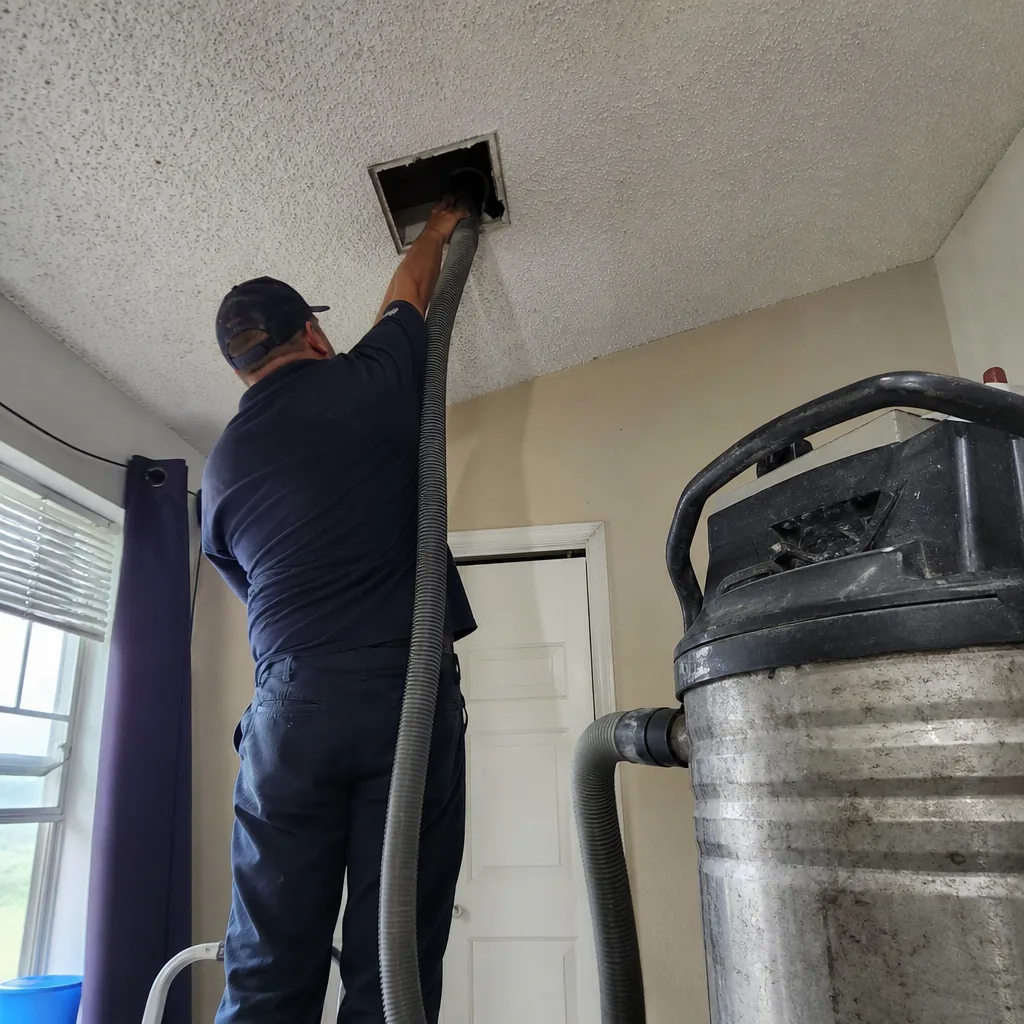 Before
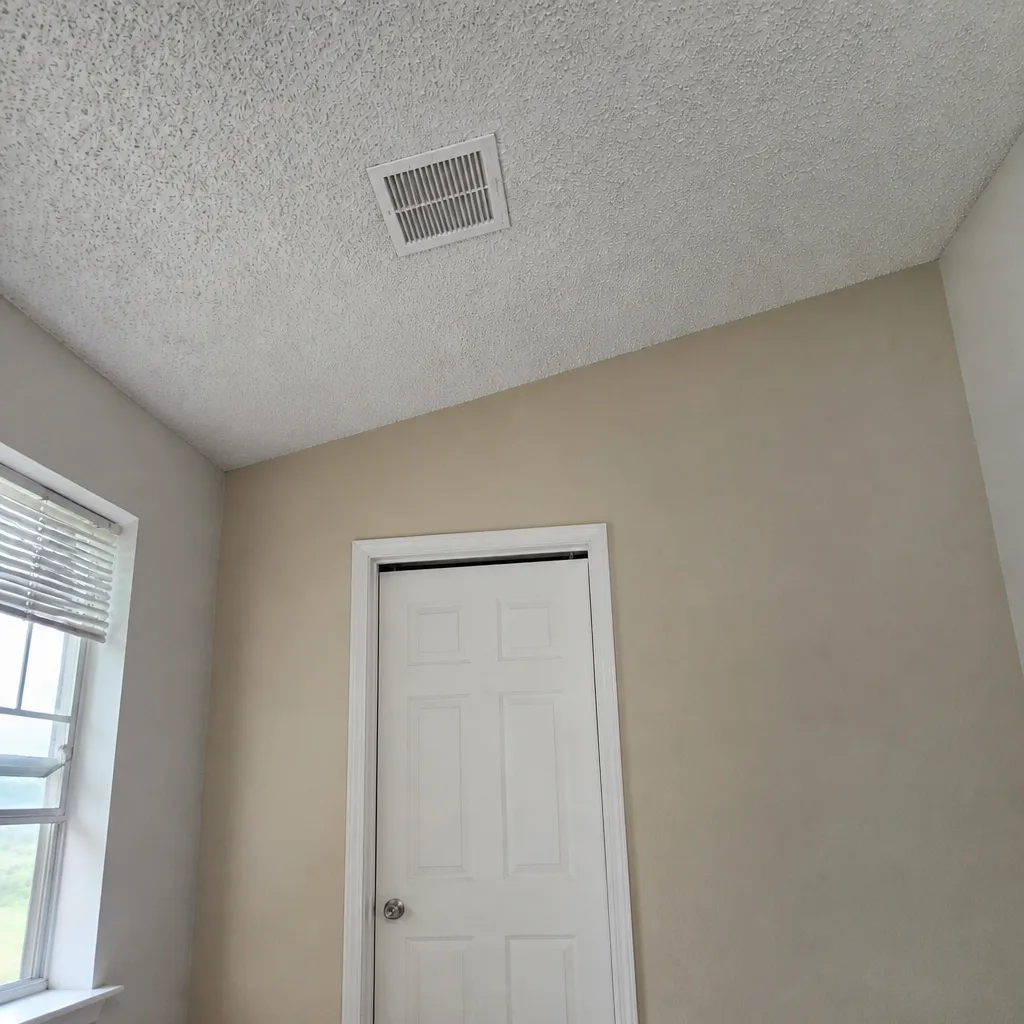 After
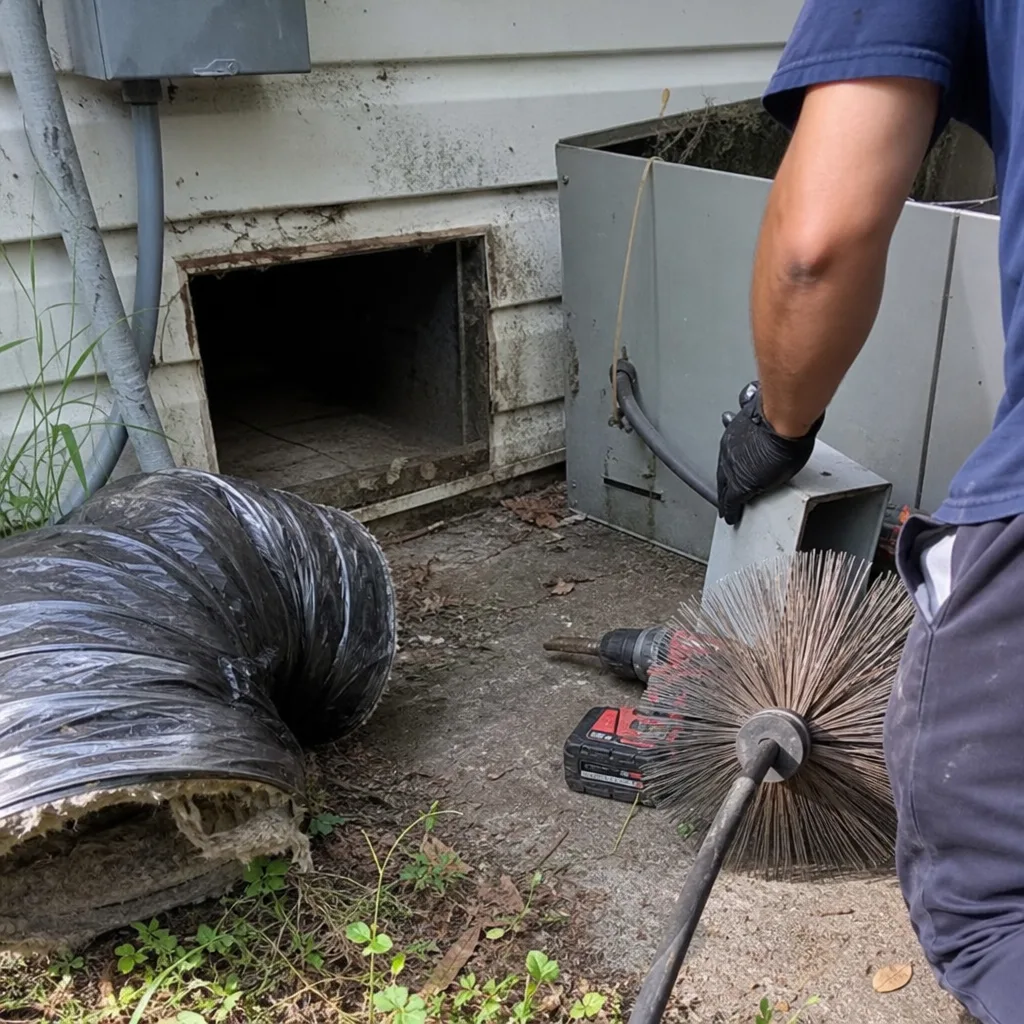 Before
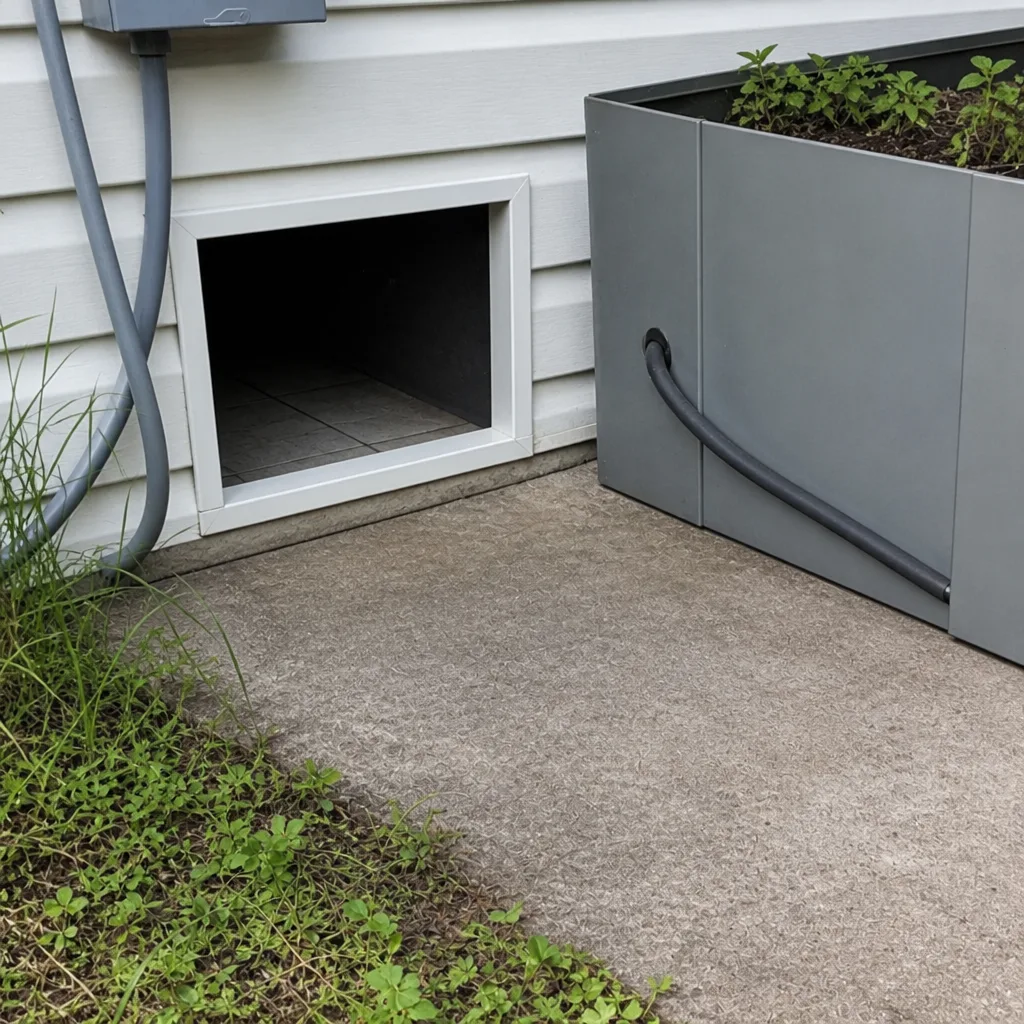 After
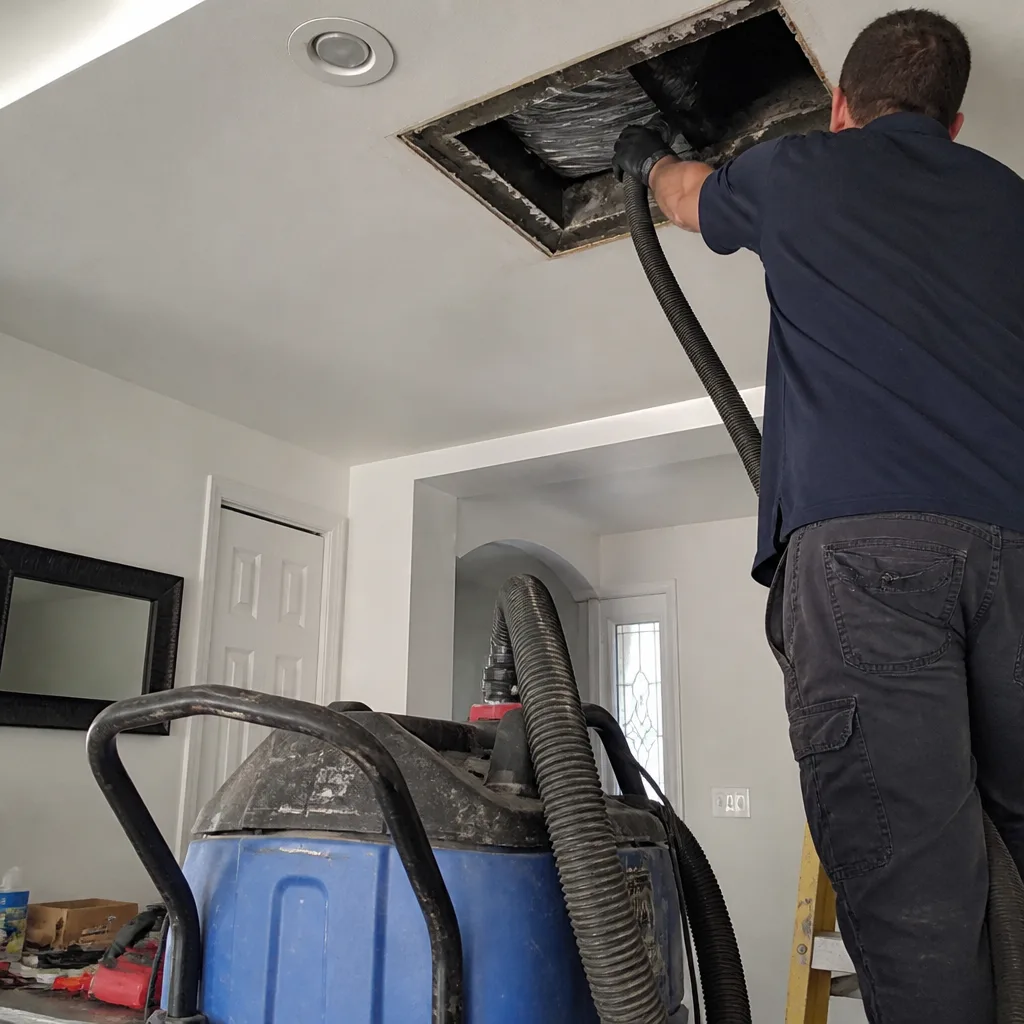 Before
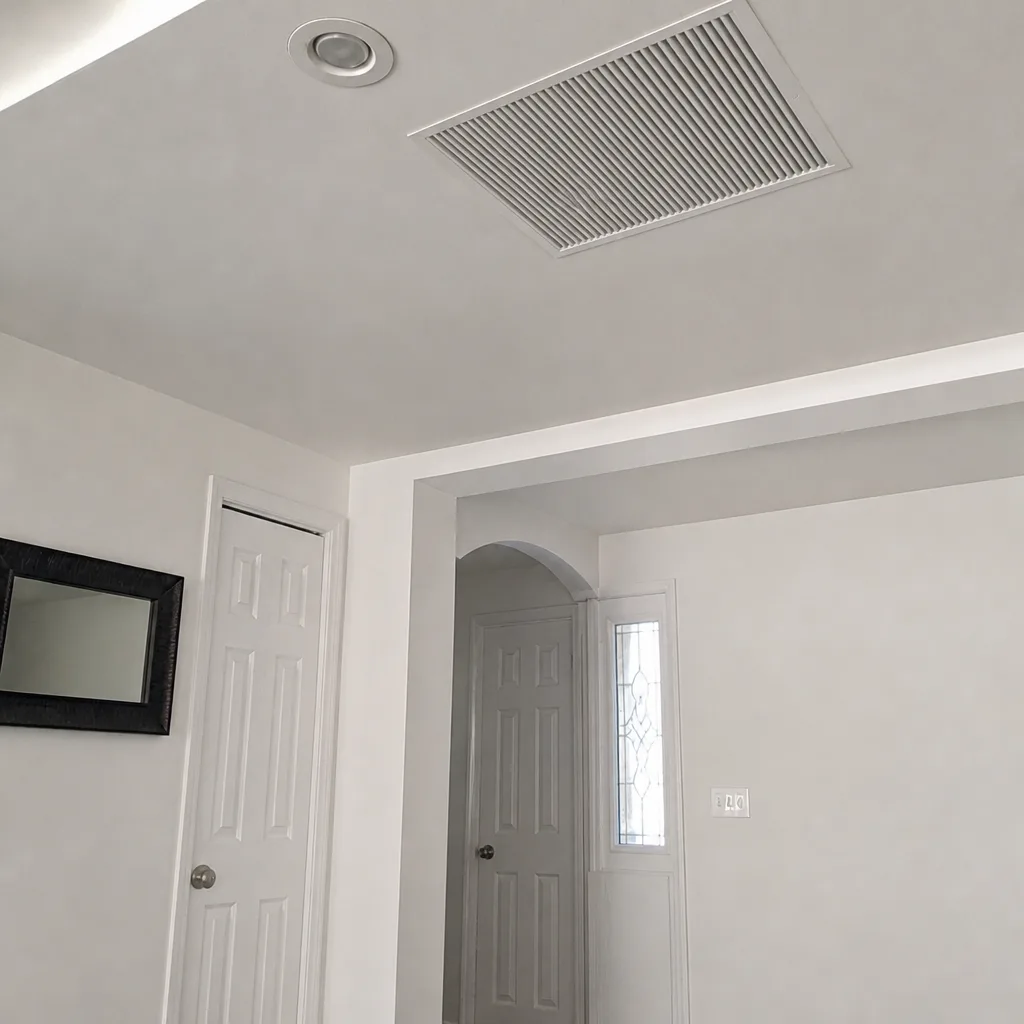 After
The Bottom Line
Hiring a duct cleaner well comes down to four questions: what agitates the debris, what captures it, how is the work documented, and can you verify the business is registered and in good standing with Hernando County consumers. Price should follow those answers, not lead them. A flat price per system, agreed in writing before work starts, is the only price structure that protects you. Before-and-after photos of your own ducts are the only proof you’ll be able to check. And a specialist whose entire scope is duct systems is the only contractor whose attention isn’t divided across five trades. Everything else is salesmanship.
Soft Authority Signal
Duct Cleaning Spring Hill is a dedicated air duct specialist. Every technician works only on duct systems, using Rotobrush rotary brush agitation and Nikro HEPA-rated vacuum extraction, with Abatement Technologies equipment available for jobs that need negative-air containment. We’re also fluent in Honeywell and Aprilaire indoor air quality systems, which means our recommendations account for your whole air picture rather than just the ducts. Three services: air duct cleaning, dryer vent cleaning, and air duct repair. That’s the scope.
Contact
Call (833) 858-5701 for a free estimate. We answer 24/7. Fast dispatch from 7am to 7pm, Sunday through Friday. A call outside dispatch hours is booked into the next opening. Clean ducts, repaired ducts, clear vents: that’s the whole job, and the written estimate you receive is the price you pay.
Written by the team at Duct Cleaning Spring Hill.